Memory capacity can quietly shape an embedded system long before software reaches its final form. Firmware size, update methods, peripheral libraries, diagnostic routines, and application features all compete for finite storage, making Flash a design parameter rather than a specification to read in isolation. The STM32F103C8T6 flash memory capacity is 64 KB, a figure that offers a useful starting point for understanding how a compact 32-bit microcontroller can accommodate application software. At Mayhwa, we look at component specifications in the context of actual system functions, so memory figures can be interpreted alongside architecture, package characteristics, and software requirements.
What 64 KB Flash Memory Actually Means
Flash memory is non-volatile storage, which means its contents remain available after the microcontroller loses power. In embedded equipment, this space commonly holds executable firmware, constant data, startup routines, and other information that the controller needs each time it boots.
A capacity of 64 KB does not mean every byte will necessarily be available for application code. Part of the memory may be allocated to startup software, configuration structures, firmware-update mechanisms, or other functions depending on the architecture of the project. The practical amount of application space is consequently determined by software organization as well as the nominal capacity.
Memory usage can also change throughout development. Early prototypes often contain relatively simple routines, while later versions gain communication protocols, fault handling, sensor calculations, or user-interface functions. Tracking the firmware footprint from the beginning gives developers a clearer picture of how much room remains as the project evolves.
Flash Capacity And Firmware Architecture
Code organization has a noticeable effect on storage consumption. Reusable libraries may simplify development, yet unnecessary modules can occupy valuable memory. Compiler settings, optimization methods, lookup tables, graphical resources, and debugging features can also influence the final binary size.
The STM32F103C8T6 uses a 32-bit microcontroller architecture, making it suitable for embedded control tasks that require more processing capability than a basic 8-bit controller might provide. Its Flash capacity should still be considered alongside the complexity of the intended software rather than treated as an indicator of overall computing performance.
A useful development practice involves measuring actual firmware size after major software milestones. Such measurements reveal whether memory consumption is increasing steadily or whether a particular library or feature has caused an unexpected jump. That information can guide software restructuring before storage limitations become disruptive.
How Flash Differs From RAM
Flash and RAM perform different jobs, and confusing the two can produce inaccurate resource estimates. Flash retains program information without continuous power, whereas RAM provides temporary working space for variables, buffers, stacks, and calculations while the controller is operating.
A firmware image may occupy relatively little Flash yet still require substantial RAM during execution. Communication buffers provide one example: the program instructions reside in non-volatile storage, but incoming packets and temporary processing data generally need working memory.
The distinction becomes especially useful when evaluating application behavior. Increasing Flash capacity would not automatically solve a RAM shortage, just as adding RAM would not provide additional permanent space for firmware. Both resources need to match the software architecture, although they influence the system in different ways.
Practical Application Of 64 KB Storage
Compact automation nodes, sensor controllers, communication devices, instrumentation, and dedicated control boards can have firmware footprints that fit comfortably within moderate Flash capacity. The suitability of a given memory size depends largely on what the controller must accomplish rather than on application category alone.
A small control program might use only a fraction of available storage, leaving room for diagnostic routines and future revisions. More feature-rich firmware could consume considerably more space through protocol stacks, middleware, display resources, or sophisticated processing functions.
Version management deserves attention as well. Some systems require multiple firmware images, recovery software, or reserved areas for configuration data. Those requirements can change the memory calculation even if the primary application code remains unchanged. Mayhwa considers these broader technical relationships when discussing component specifications, helping teams interpret memory capacity within the context of actual embedded-system requirements.
Reading The Specification In Context
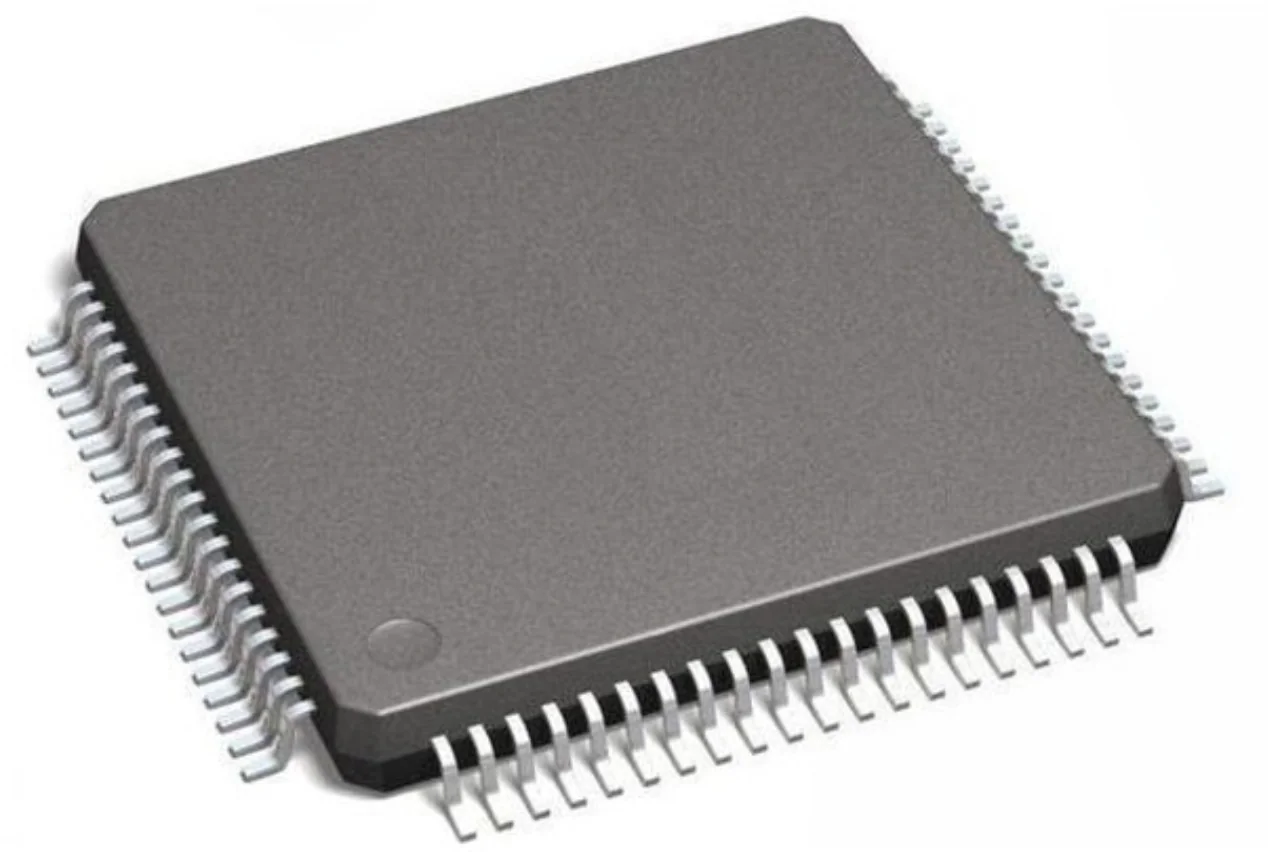
The product specification provides a concise hardware reference: STM32F103C8T6 is identified as an IC MCU with a 32-bit architecture, 64 KB Flash, and a 48LQFP package. Those details describe the basic component configuration, while the eventual usefulness of its memory depends on firmware architecture, peripheral demands, update strategy, and the amount of data the application must retain.
Package format can matter alongside memory because board dimensions, routing, thermal considerations, and assembly processes influence the overall hardware design. A controller with suitable storage may still require careful evaluation of its physical and electrical characteristics before being integrated into a finished board.
Software planning offers another perspective. Instead of asking only whether 64 KB sounds sufficient, developers can estimate the expected binary size, account for reserved memory regions, assess future functionality, and monitor actual usage during development. This approach produces a more meaningful assessment than relying on the headline capacity alone.
Conclusion
A Flash specification becomes much more informative once it is connected to the software that will occupy it. With STM32F103C8T6 flash memory rated at 64 KB, designers have a defined space for firmware and persistent program-related content, but the real requirement depends on code structure, update mechanisms, retained data, and future functionality.
Understanding the difference between Flash and RAM adds another layer of clarity, particularly in resource-conscious embedded designs. At Mayhwa, we focus on that broader technical picture so that a memory figure becomes part of a practical system assessment rather than an isolated number.