Modern industrial electronics rarely depend on a single type of integrated circuit. A motor controller, monitoring instrument, robotic platform, or factory sensor may combine signal conditioning, voltage regulation, data conversion, interface functions, and protection within one architecture.
Understanding these roles helps teams work more effectively with analog IC suppliers, especially when electrical performance must remain consistent across different operating conditions. At Mayhwa, we consider the surrounding circuit, application environment, and lifecycle requirements together rather than treating each analog component as an isolated purchase.
Signal Conditioning For Industrial Measurements
Sensors often produce signals that are too weak, noisy, or inconsistent for direct processing. Operational amplifiers, instrumentation amplifiers, filters, and comparators can reshape those signals before they reach a microcontroller or data converter. The appropriate circuit depends on factors such as bandwidth, input range, offset, noise, and the nature of the sensor itself.
Industrial equipment presents additional challenges because electrical interference can come from motors, switching supplies, relays, and long cable runs. A measurement circuit designed for a quiet laboratory may behave differently inside a factory cabinet. Working with experienced analog devices distributors can give development teams access to components suited to a wider range of analog signal-chain requirements.
Signal conditioning also affects the usefulness of downstream digital analysis. Excessive noise or poor scaling can reduce the information available to an ADC, while inappropriate filtering may remove meaningful changes from a sensor signal. The analog front end deserves attention early in the architecture because its characteristics influence every subsequent processing stage.
Voltage References And Power Functions
Stable voltage rails provide the foundation for many industrial circuits. Regulators manage supply levels, references establish known voltage points, and monitoring devices detect abnormal conditions. These functions may appear secondary beside processors or communication chips, yet they directly influence measurement stability and system behavior.
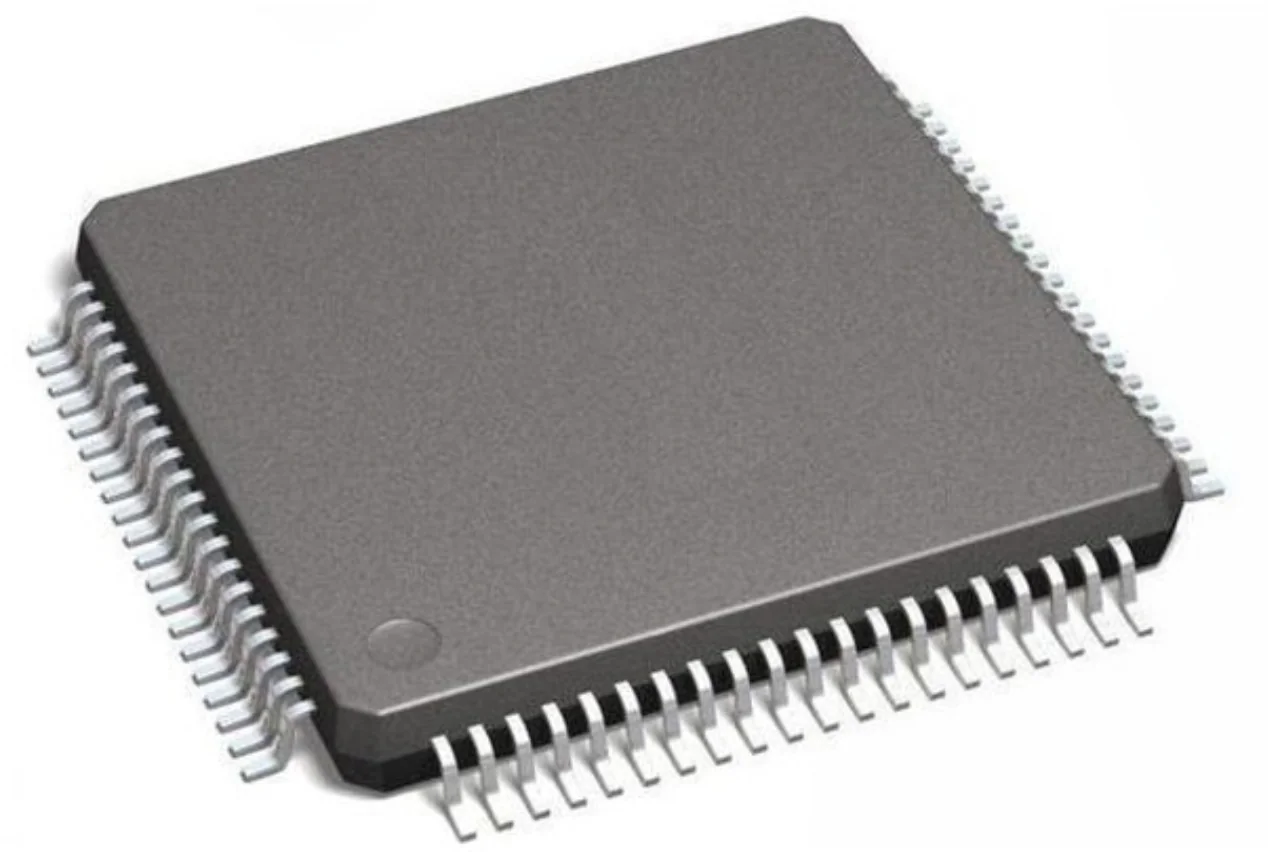
A compact example is the AD1582ARTZ-REEL7, an IC VREF SERIES specified with 0.8% accuracy in a SOT23-3 package. Its combination of reference functionality and small packaging illustrates how a seemingly simple analog device can occupy an important position in a space-constrained circuit. Such characteristics should be interpreted in relation to the reference voltage requirements and the surrounding design.
Data Conversion And Control Interfaces
Analog-to-digital converters bridge physical measurements and software-based decision systems. Their resolution, sampling behavior, input structure, and reference requirements influence how accurately a system can interpret real-world signals. Digital-to-analog converters perform the reverse task, allowing processors to control actuators, set thresholds, or generate analog outputs.
Industrial automation adds another layer of complexity because conversion devices often interact with sensors, controllers, isolation circuits, and communication interfaces. A converter with suitable headline specifications may still require careful consideration of signal range, timing, noise, and board layout. Analog devices distributors can support access to devices across different parts of these mixed-signal architectures.
Interface ICs also deserve consideration in equipment that communicates across long distances or electrically noisy environments. Transceivers, isolation devices, and protection circuits can influence how reliably information travels between control modules. Looking at the complete signal path usually provides more useful insight than evaluating a conversion component by resolution alone.
Amplifiers, Comparators, And Monitoring Devices
Amplifiers serve numerous purposes beyond increasing signal magnitude. Depending on their configuration, they can buffer sensor outputs, perform mathematical operations, filter unwanted frequencies, or adapt signals between circuit stages. Selection often revolves around input and output characteristics, common-mode range, bandwidth, slew rate, noise, and supply voltage.
Comparators operate differently by determining whether an input crosses a defined threshold. That makes them useful in overvoltage detection, fault monitoring, zero-crossing circuits, and simple control functions. Their response behavior can matter greatly in systems that react to rapidly changing electrical conditions.
Monitoring ICs add another layer by observing parameters such as current, voltage, temperature, or power conditions. Through our work at Mayhwa, we see value in considering these supporting functions alongside the main controller. A system may contain sophisticated computing hardware, yet its practical behavior still depends on the smaller analog circuits responsible for sensing and conditioning the surrounding electrical environment.
Matching Analog IC Categories To Applications
No single analog IC category fits every industrial application. A factory temperature-monitoring module may emphasize low noise and stable references, while a motor-control board may place greater weight on response speed, current sensing, and protection. Medical instrumentation, robotics, process control, and energy equipment each introduce their own combination of electrical and environmental demands.
The application lifecycle matters as well. Prototype designs may prioritize development flexibility, whereas established products often require stable documentation, predictable packaging, and repeatable supply. Analog IC suppliers can play different roles across these stages, particularly when a design expands from a single evaluation board into several product variants.
Component selection becomes more manageable once the circuit is divided according to function: sensing, conditioning, conversion, regulation, control, communication, and protection. That functional view allows teams to identify which specifications actually influence system behavior and which are less critical. Analog devices distributors may then become part of a broader sourcing approach built around technical fit, supply continuity, and changing production requirements.
Conclusion
Industrial electronics work because many small functions cooperate quietly behind the visible capabilities of the final machine. Voltage references influence measurements, amplifiers shape signals, converters translate information, and monitoring circuits respond to abnormal conditions.
Analog IC suppliers provide access to these different building blocks, but their value becomes clearer when component categories are matched to actual circuit roles rather than selected from specifications in isolation. At Mayhwa, we take that application-centered view when supporting component sourcing, while analog devices distributors remain an important part of the wider ecosystem connecting industrial designs with the analog technologies they depend on.