Industrial systems increasingly rely on precise data rather than raw computing power alone. Sensors, control modules, motor drives, and edge processors must interpret physical conditions quickly enough to support automated decisions, while their supporting analog circuits still determine how faithfully those signals enter the digital domain.
For organizations working with ADI distributors, the real challenge is understanding how analog components contribute to an AI-enabled architecture. At Mayhwa, we view these systems as interconnected signal chains in which measurement accuracy, response behavior, power efficiency, and operating conditions all influence the usefulness of downstream intelligence.

Analog Signal Paths In AI Industrial Equipment
Artificial intelligence may perform the analysis, yet the information it receives originates in the physical world. Temperature sensors, current monitors, pressure transducers, vibration detectors, and position sensors produce signals that require conditioning before a processor can interpret them. Amplification, filtering, voltage references, and conversion circuits collectively shape the quality of that information.
Industrial environments also introduce electrical noise, temperature variation, and fluctuations in supply voltage. A signal chain designed only around nominal laboratory conditions may behave differently once installed beside motors, relays, or switching power supplies. Analog devices distributors can become part of a broader sourcing strategy when designers need access to components suited to these demanding operating environments.
AI algorithms cannot recover every detail that disappears before data reaches the processor. That makes analog architecture particularly important in applications such as predictive maintenance, robotic control, machine vision support circuits, and industrial instrumentation. Better data acquisition can give computational models a more stable foundation without requiring the algorithm itself to compensate for avoidable electrical variation.
Precision References And Measurement Stability
Voltage references deserve special attention because many measurement and conversion circuits depend on a stable electrical reference. Even small deviations can influence ADC performance, sensor interpretation, calibration, or threshold detection. The significance becomes greater when equipment must distinguish relatively small changes in an industrial signal.
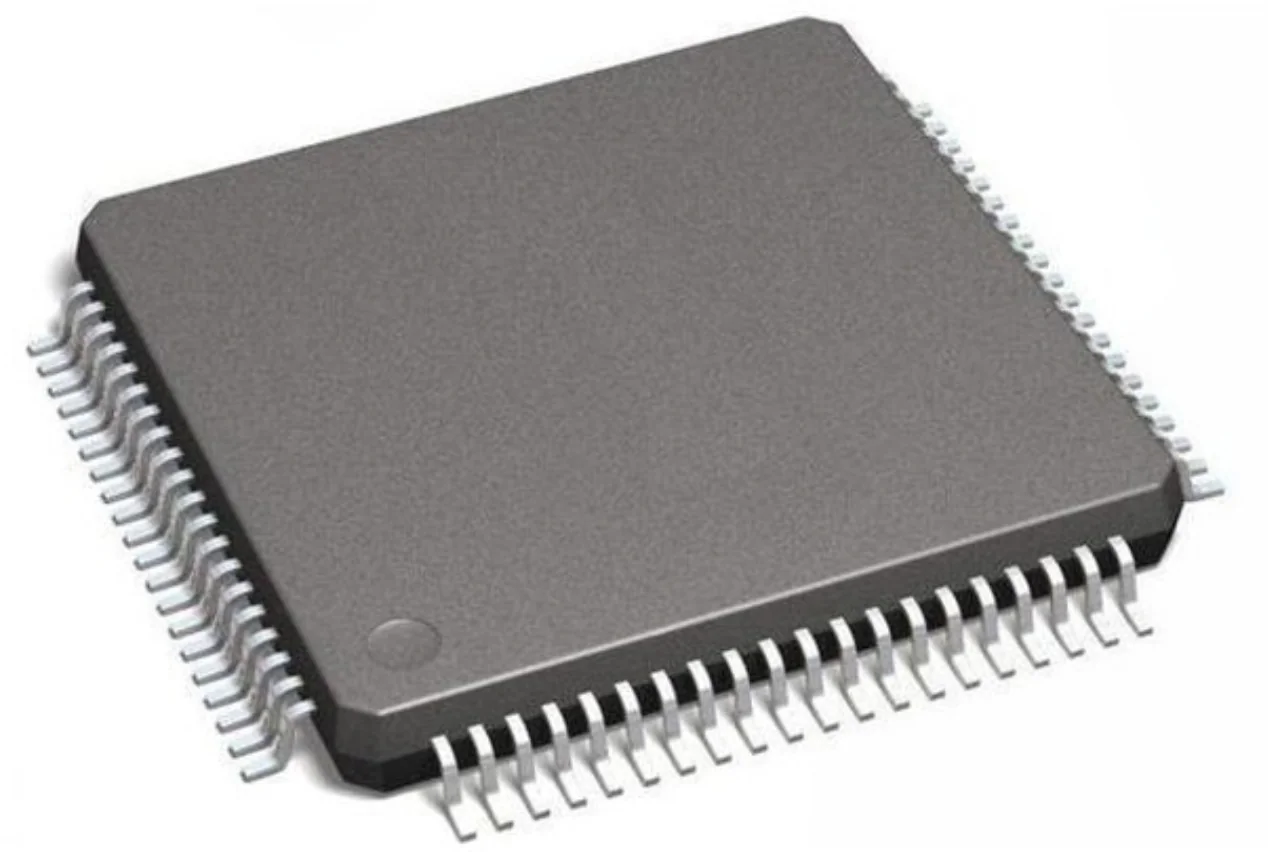
One example is the AD1580BRTZ-R2, an IC VREF SHUNT specified with 0.08% accuracy and housed in a compact SOT23-3 package. Its specifications illustrate how reference accuracy and package size can both matter in dense circuit layouts. Rather than treating a reference as an incidental supporting component, designers can consider its electrical characteristics as part of the measurement architecture.
For ADI distributors, technical understanding of these distinctions can be useful because AI-enabled equipment often combines compact electronics with increasingly sensitive measurement functions. Reference behavior, temperature characteristics, output requirements, and circuit topology should be considered alongside the processor and sensor rather than evaluated as isolated details.
Edge Intelligence And Real-Time Decisions
AI processing is increasingly moving closer to industrial equipment. Edge-based systems can analyze information locally, which may reduce dependence on continuous cloud communication and shorten the distance between detection and response. Such architectures are useful for equipment that must react rapidly to vibration changes, abnormal current patterns, or unexpected mechanical behavior.
However, local intelligence introduces its own design priorities. Processing hardware needs suitable power rails, clocks, interfaces, memory, and signal-conditioning circuits. Analog devices distributors may support sourcing across different stages of the signal path, but component selection still depends on the electrical relationships among those stages.
Thermal behavior deserves consideration as computational workloads rise. More processing can increase heat generation, while elevated temperatures may affect analog accuracy and semiconductor performance. Industrial designers therefore need to consider thermal paths, enclosure conditions, airflow, and component operating ranges as part of the overall architecture instead of treating heat as a later-stage issue.
Power Integrity And System Reliability
A sophisticated AI controller can still suffer from poor performance if its power network is unstable. Voltage regulators, references, filtering components, protection devices, and decoupling networks interact continuously with digital loads. Rapid changes in processor activity can create transient demands that influence nearby analog circuitry.
The relationship between power integrity and signal integrity becomes particularly important in mixed-signal equipment. Switching currents from digital sections may introduce interference into sensitive measurement paths, while inadequate grounding can create additional noise. A well-planned board separates sensitive analog functions from high-current switching paths where appropriate.
ADI distributors can also be evaluated from a system perspective rather than by individual part availability alone. A sourcing network becomes more useful when it can support different component categories as product designs evolve, especially when a project contains multiple board revisions or several equipment variants.
Building A Flexible Industrial Electronics Architecture
Industrial AI products rarely remain static. Sensor configurations may change, computing requirements can increase, and communication interfaces may evolve during a product’s service life. Modular circuit design can make these transitions easier by separating sensing, conditioning, processing, communication, and power functions into clearly defined sections.
Another consideration is component lifecycle management. A device selected for a prototype may eventually become part of a long-running production program. Documentation, packaging information, lot traceability, and availability patterns can become increasingly relevant as production volumes grow. Analog devices distributors can play different roles at different stages, from prototype access to recurring supply coordination.
At Mayhwa, we approach component sourcing with the wider architecture in mind, looking beyond individual part numbers to understand how analog devices fit into industrial electronics, data acquisition, and edge-processing systems. AI may provide the analytical capability, but dependable results still begin with the physical signals entering the system. ADI distributors that can support that broader perspective become more relevant as industrial designs continue to combine precision electronics with increasingly capable intelligence.
Conclusion
Industrial AI is not simply a matter of adding a powerful processor to existing equipment. Its effectiveness depends on a chain of measurements, references, power circuits, interfaces, and computing resources working within realistic electrical and environmental conditions. ADI distributors therefore occupy only one part of the larger engineering ecosystem, while analog devices distributors can contribute to sourcing strategies that span multiple stages of a system’s development.
At Mayhwa, we focus on that wider connection between components and applications, helping our team approach modern industrial electronics with attention to signal quality, architecture, lifecycle considerations, and practical supply requirements.