From smart appliances to industrial equipment, microcontrollers quietly control many of the electronic systems we use every day. But what is a microcontroller, and how does a microcontroller work? This article explains the basic structure, working process, types, key features, applications, and selection factors of MCUs, helping you understand where they are used and how to choose the right one for your design.
What Is a Microcontroller (MCU)?
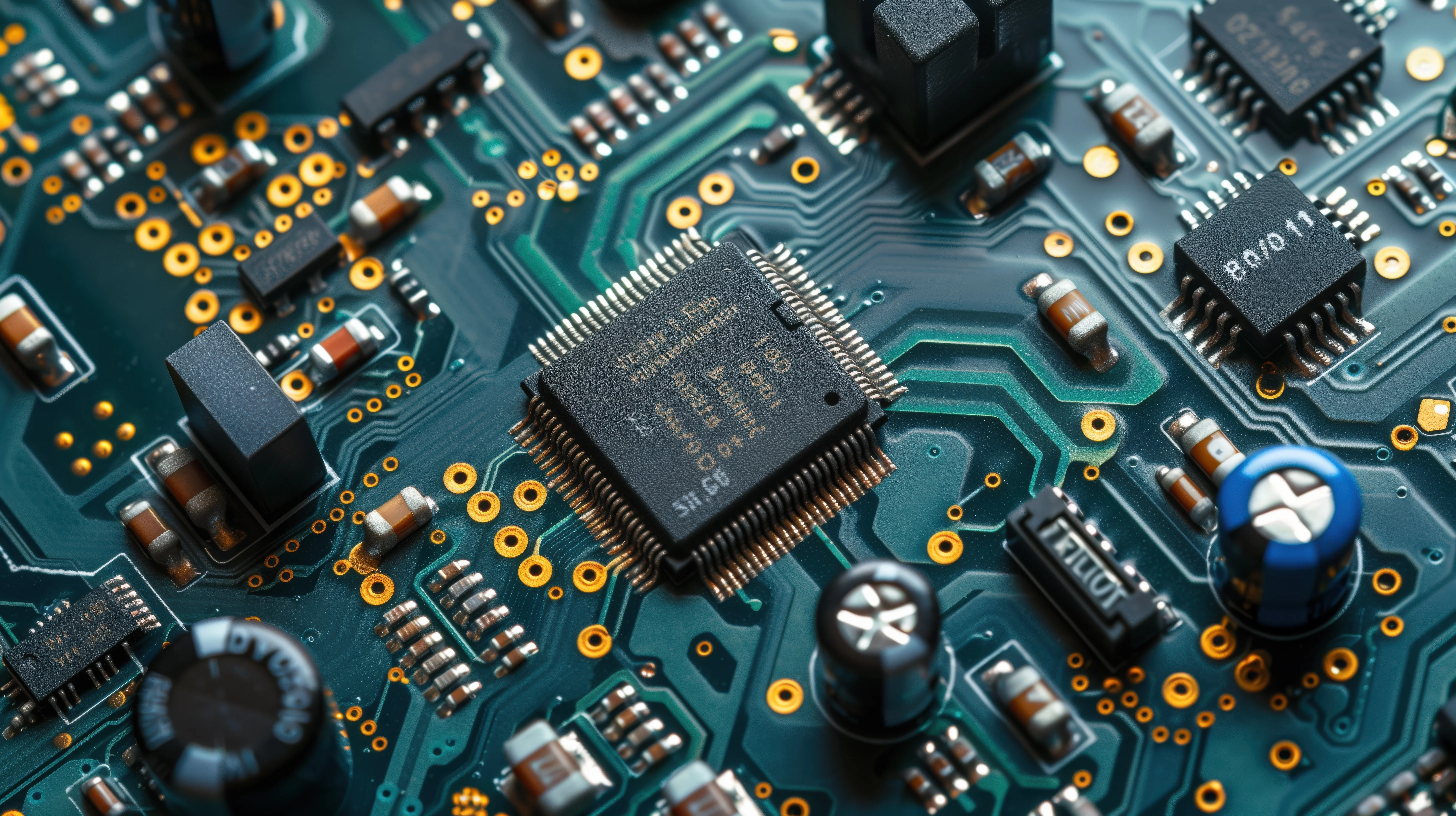
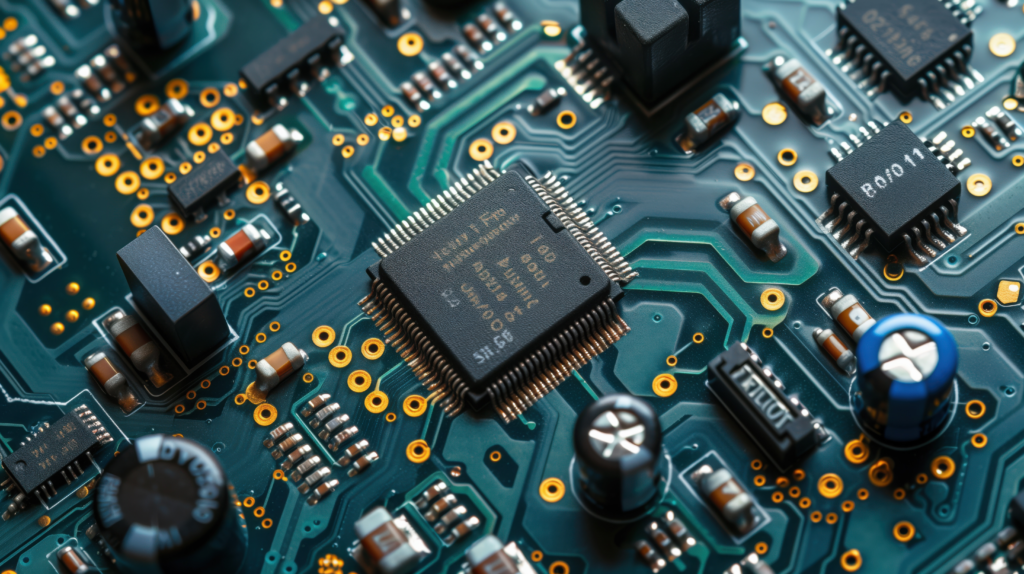
A microcontroller, or MCU, is a compact integrated circuit that combines a processor, memory, and programmable peripherals on a single chip. It is commonly used as the core computing component in embedded electronic systems.
So, what is the main purpose of a microcontroller?
Its main purpose is to execute programmed instructions and manage specific functions within a device or system. Depending on the design, an MCU can handle tasks ranging from simple switching and timing to more complex monitoring and control.
How Does a Microcontroller Work?
To understand how a microcontroller works, it helps to look at the basic control cycle it follows. An MCU receives information from its surroundings, processes that information according to its program, and then produces the required response.
Step 1: Receive Input
The MCU first receives signals from components such as sensors, buttons, switches, or communication modules. These signals provide information about operating conditions, user commands, or changes in the surrounding environment.
Step 2: Process the Data
The processor then reads the incoming data and executes the relevant instructions stored in memory. Depending on the task, this may involve calculations, comparisons, timing, or data conversion.
Step 3: Make a Decision
Based on the processed data, the MCU evaluates predefined conditions or rules in the program and determines the appropriate response. This allows the system to react according to its programmed logic.
Step 4: Control the Output
Once the required response is determined, the MCU generates the corresponding output signals to control connected components and carry out the intended operation.
Step 5: Repeat in Real Time
The MCU continuously repeats this process while the system is running. By cycling through input, processing, decision-making, and output, it can respond quickly to changing conditions and maintain real-time control.
What Are the Main Components of a Microcontroller?
A microcontroller combines several functional blocks on a single chip. Together, these components allow the MCU to execute instructions, store data, interact with external devices, and respond to events in real time.
CPU (Central Processing Unit)
The CPU is responsible for executing program instructions, performing calculations, and coordinating the operation of other MCU components. Its architecture and processing capability have a direct impact on overall system performance.
Memory
MCUs typically include Flash memory for storing program code and RAM for temporary data during operation. Some devices also include EEPROM or other non-volatile memory for retaining settings and parameters.
GPIO (General-Purpose Input/Output)
GPIO pins provide the basic connection between the MCU and external hardware. They can usually be configured as inputs for receiving digital signals or as outputs for controlling connected components.
Timers and PWM
Timers are hardware peripherals used for time-based functions such as delays, event counting, and periodic operations. In many microcontrollers, timer peripherals also support PWM (pulse-width modulation), which generates controlled pulse signals for functions such as motor-speed or LED-brightness control.
ADC and DAC
An ADC converts analog signals from sensors or other sources into digital data that the MCU can process. When an analog output is required, a DAC performs the reverse conversion, turning digital values into corresponding analog signals.
Communication Interfaces
To exchange data with external devices or other controllers, a microcontroller may include interfaces such as UART, SPI, I²C, CAN, and USB. The appropriate interface depends on factors such as data rate, communication distance, wiring requirements, and system complexity.
Clock and Interrupt System
The clock provides the timing reference that keeps MCU operations synchronized. Working alongside it, the interrupt system allows the processor to respond quickly to important events without continuously checking for them, improving overall processing efficiency.
What Are the Different Types of Microcontrollers?
Understanding the different types of microcontrollers helps engineers select the right MCU based on processing requirements, cost, and application needs. Microcontrollers can be classified in different ways, but one of the most common methods is based on CPU data width.
This refers to how much data the processor can handle in a single operation. Based on this standard, MCUs are generally divided into 8-bit, 16-bit, and 32-bit microcontrollers.
8-Bit Microcontrollers
8-bit microcontrollers are designed for simple and cost-sensitive applications. They can process 8 bits of data at a time and usually provide basic computing capability, limited memory, and essential peripherals for straightforward control tasks.
16-Bit Microcontrollers
16-bit microcontrollers provide a balance between performance and efficiency. Compared with 8-bit devices, they can process larger amounts of data and offer improved calculation capability, making them suitable for applications that require moderate processing power while maintaining low power consumption and reasonable cost.
32-Bit Microcontrollers
32-bit microcontrollers provide higher processing performance, larger memory capacity, and more advanced peripheral support. They are commonly used in complex embedded systems that require real-time processing, advanced communication, or more demanding control functions. Many widely used MCU families, such as the STM32 microcontroller series, are based on 32-bit architectures and are designed for applications across industrial, automotive, IoT, and consumer electronics markets.
Key Features of a Microcontroller
When selecting a microcontroller, engineers usually compare several key specifications to find the right balance between performance, functionality, cost, and power efficiency. The following parameters are commonly evaluated when comparing different MCU options.
Clock Speed
Clock speed is often the first specification considered when comparing MCU performance. It determines the maximum rate at which the processor operates and influences how quickly instructions can be executed. For applications involving intensive calculations or strict timing requirements, processing speed becomes a major selection factor.
Flash Memory
Flash memory is closely related to the software scale of the final product. A small embedded device with simple firmware may require limited storage, while systems with graphical interfaces, communication protocols, or complex application logic typically need more program space.
RAM
RAM requirements are usually determined by the amount of data handled while the system is running. Unlike Flash memory, which stores the program, RAM supports temporary operations such as data buffering and runtime processing. Insufficient RAM can limit software functions even when the processor performance is adequate.
Number of GPIO Pins
GPIO count is mainly related to hardware design flexibility. The available pins define how many external signals and devices can be connected directly to the MCU, which may influence PCB design, peripheral selection, and overall system architecture.
Communication Interfaces
The choice of communication interfaces depends on the devices the MCU needs to connect with and the requirements of the overall system. Common interfaces include:
Interface | Main Characteristics | Typical Applications |
UART | Simple point-to-point serial communication | Debugging, modules, and device communication |
SPI | High-speed communication with multiple peripherals | Displays, sensors, memory devices |
I²C | Two-wire communication with multiple devices | Sensor networks and low-speed peripherals |
CAN | Reliable communication in noisy environments | Automotive and industrial control systems |
USB | Standardized high-speed connection | Computer peripherals and user-interface devices |
Power Consumption
Power consumption is often a trade-off between performance and efficiency. Low-power operation is a priority for battery-powered products, while systems requiring higher computing capability may accept increased energy usage to achieve better performance.
Where Are Microcontrollers Used?
Microcontrollers are widely used in embedded systems across different industries. Their ability to process inputs, control hardware, and perform real-time operations makes them suitable for many electronic products and systems.
- Automotive Electronics: body electronics, lighting, motor systems, battery management, infotainment functions, and other vehicle subsystems.
- Industrial Automation: robotics, control systems, instrumentation, factory equipment, sensors, and automation devices.
- Motor Control: motor speed, torque, direction, feedback, and protection in fans, pumps, appliances, robots, and industrial drives.
- IoT and Smart Devices: processing sensor data, managing connectivity, reducing power consumption, and controlling smart-home and connected devices.
- Consumer Electronics: MCUs control functions in appliances, wearable devices, toys, personal electronics, displays, and household equipment.
- Medical Devices: sensing, monitoring, user interfaces, portable devices, and embedded control functions.
- Energy and Power Systems: power conversion, charging, battery systems, inverters, renewable-energy equipment, and energy-monitoring applications.
Top MCU Picks for Your Next Design
Selecting the right MCU requires not only evaluating performance and specifications but also choosing a reliable supplier. Mayhwa is an independent electronic component distributor providing global sourcing and supply chain solutions. With access to 2,000+ global suppliers and 3,000+ SKUs stocked in Shenzhen and Hong Kong warehouses, Mayhwa supports customers with efficient sourcing, inventory availability, and flexible purchasing options.
Best for General-Purpose Embedded Systems: STM32F427VGT6
The STM32F427VGT6 is a strong choice for general-purpose embedded systems requiring high processing performance and extensive peripheral resources. Based on the STM32F4 series, it is suitable for advanced control functions, real-time processing, and complex embedded designs.
Best for Industrial and IoT Applications: LPC5536JBD100E
The LPC5536JBD100E is a practical MCU option for industrial and IoT applications, combining efficient processing capabilities with flexible peripheral integration. It is suitable for embedded systems requiring reliable control and connectivity.
Best for Cost-Effective 8-Bit Control: ATMEGA2560-16AU
The ATMEGA2560-16AU is a cost-effective choice for 8-bit control applications, offering extensive I/O resources and flexible peripheral support. It is suitable for designs requiring multiple device connections and economical MCU solutions.
With strict quality control, one-stop BOM kitting services, and professional technical support, Mayhwa helps engineers and manufacturers source reliable MCU components while improving procurement efficiency.
Want to explore more options? Browse our full product catalog.
Choosing the Right MCU for Your Next Embedded Design
Understanding what a microcontroller is and how it works is the first step toward selecting the right MCU for an embedded system. Different applications require different levels of performance, memory, and functionality. Mayhwa provides reliable MCU sourcing solutions with global supply chain support, quality assurance, and flexible purchasing services. Contact us to find the right microcontroller for your next design.