AI hardware is pushing electronic systems toward higher current densities, faster signal transitions, tighter board layouts, and more demanding thermal conditions. These changes affect not only processors and memory devices but also the passive components that shape power and signal behavior.
Within such architectures, electronic components sourcing requires a broader view of electrical specifications, production requirements, lifecycle conditions, and supply flexibility. At Mayhwa, we approach these challenges by looking at how individual components fit into the wider hardware environment rather than treating availability as the only consideration.
Power Density Is Changing Passive Component Requirements
AI computing hardware can experience rapid changes in current demand as processing workloads fluctuate. Power delivery networks must respond to those variations while keeping voltage behavior within the range required by sensitive devices.
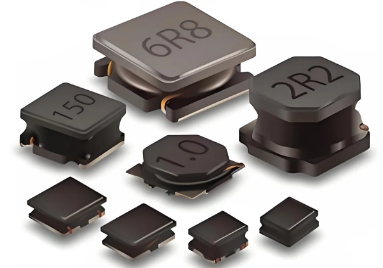
Inductors have an important role in this process because they store electrical energy in a magnetic field and can help regulate current within switching power circuits. Their inductance, saturation characteristics, rated current, resistance, physical dimensions, and thermal behavior all influence circuit performance.
Higher power density also creates spatial constraints. A component that performs well electrically may occupy too much board area or introduce unwanted thermal interaction with nearby devices. Modern designs consequently require electrical and physical characteristics to be considered as parts of the same design problem.
Understanding Inductor Selection In AI Systems
Inductor behavior becomes particularly relevant in DC-DC conversion. Switching regulators use inductors to smooth current and transfer energy between different stages of a power circuit, helping convert an input voltage into a level appropriate for processors and other loads.
Saturation current deserves particular attention. As current rises, an inductor’s effective inductance can decrease, changing the behavior of the converter. Selecting a component solely according to its nominal inductance may not provide enough information about how it will perform under actual load conditions.
Losses create another consideration. DC resistance contributes to conduction loss, while the magnetic material and operating frequency influence other forms of energy loss. Thermal rise can follow, especially in compact assemblies where airflow is limited. A suitable design balances electrical performance with temperature and available board space.
Supply Complexity Beyond Major Semiconductors
The most visible components in AI hardware tend to attract the greatest attention, but passive devices can also create supply challenges because modern boards may use large quantities of them. A disruption involving a seemingly modest component can become significant when that part is used across many assemblies.
An electronic components distributor can provide useful visibility across multiple component categories, particularly when manufacturers need to coordinate semiconductors with capacitors, inductors, resistors, connectors, and protection devices. Inventory information and manufacturer references can help teams understand the wider component mix.
At Mayhwa, we consider factors such as package information, electrical specifications, manufacturer references, and available supply channels when supporting component requirements. That perspective is useful for AI hardware because changes in power architecture can affect several passive-device requirements simultaneously.
Why Technical Data Matters During Component Planning
Component databases often contain large amounts of information, but the challenge lies in identifying which specifications actually affect the application. For inductors, parameters such as inductance tolerance, rated current, saturation current, DC resistance, and frequency characteristics may be more meaningful than a simple part-category description.
Application conditions should also be documented clearly. Input voltage, output voltage, switching frequency, expected load range, ambient temperature, and available board space provide the context needed to interpret component specifications properly.
Substitution requires the same level of attention. Two devices with similar nominal values may have different magnetic structures, dimensions, thermal characteristics, or current ratings. Treating them as direct equivalents without reviewing the relevant parameters can introduce unwanted changes into the power network.
Creating More Flexible AI Hardware Supply Strategies
Rapid hardware development makes flexibility increasingly valuable. AI platforms may change their processor configuration, power budget, memory architecture, or board dimensions during development, which can alter the supporting component requirements as well.
An electronic components sourcing strategy can account for these changes by maintaining clear technical requirements and identifying suitable alternatives before a supply problem becomes urgent. This approach is different from simply accumulating inventory; it connects component data with application needs and future design scenarios.
Forecasting should also reflect component consumption patterns. A part used in several board sections may require a different planning method from one associated with a single specialized circuit. At Mayhwa, we use this broader supply perspective to help teams interpret availability alongside technical requirements, package characteristics, and potential changes in system architecture.
Conclusion
AI hardware supply chains are being reshaped by more than demand for advanced processors. Power conversion, thermal constraints, board density, passive-component behavior, and manufacturing scale all contribute to the complexity of modern systems.
A thoughtful electronic components distributor relationship can provide useful access to component information and supply channels, while an electronic components sourcing strategy benefits from technical clarity and flexibility. At Mayhwa, we focus on those connections so component planning can keep pace with the evolving requirements of high-performance electronic hardware.