In our increasingly digital world, the invisible engines driving almost every piece of technology we touch are memory chips. From the smartphone in your pocket and the laptop on your desk to the complex servers managing cloud data and the advanced systems inside modern vehicles, memory chips are the unsung heroes making it all possible. They dictate how fast an app opens, how seamlessly a video streams, and how efficiently vast amounts of data are processed. Understanding the role and mechanics of memory chips is essential for grasping the foundation of modern electronic devices.
What Is a Memory Chip?
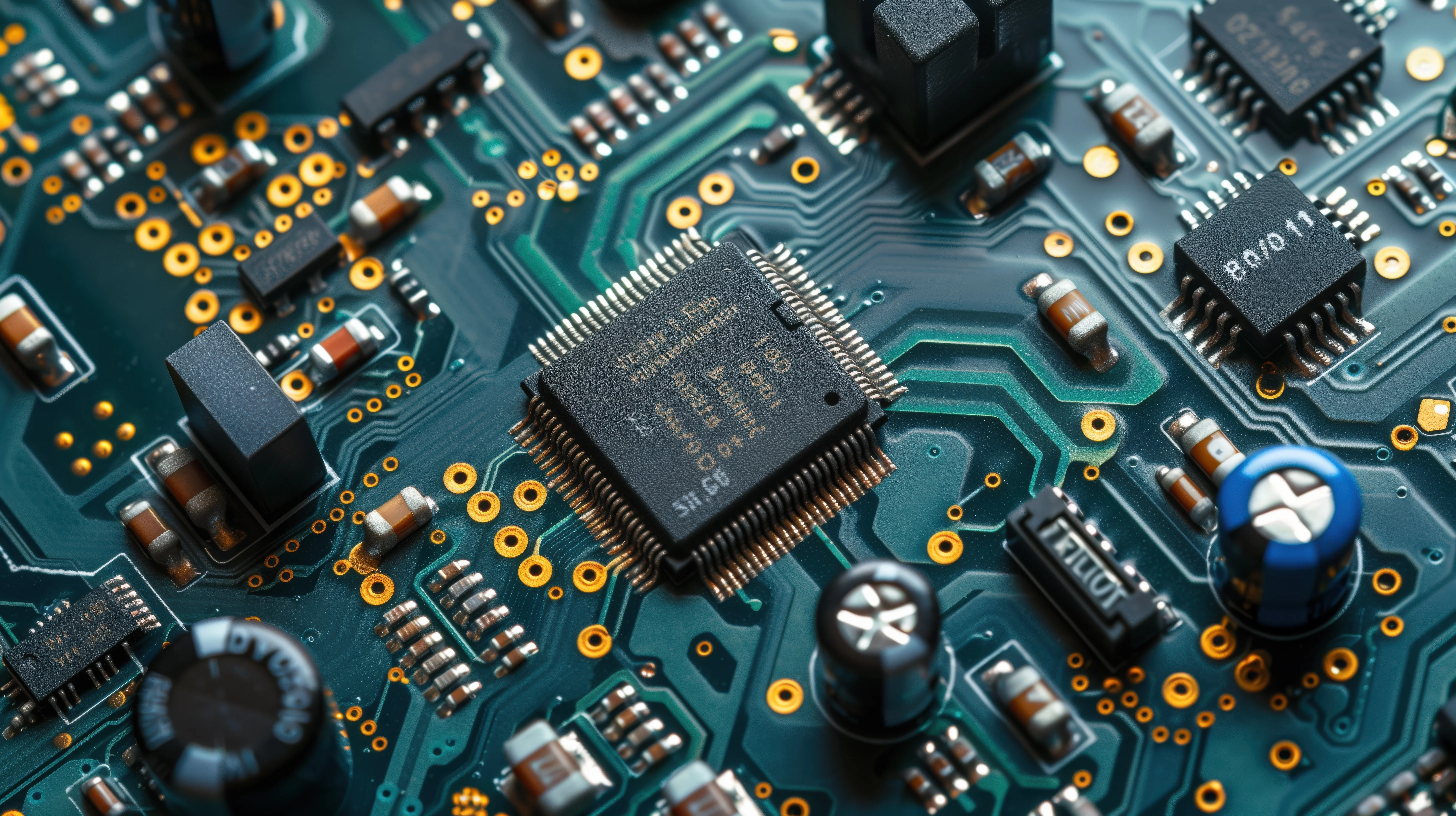
At its core, a memory chip is a specialized integrated circuit composed of millions or even billions of transistors and capacitors. It is a fundamental hardware component designed specifically to store digital data and instructions. These chips act as the electronic workspace and storage vault for computing devices, holding information temporarily for immediate processing or permanently for long-term retention.
How Do Memory Chips Work?
Memory chips operate through a vast grid of electrical cells. Each cell stores a single bit of data, represented as either a “1” or a “0,” which corresponds to the presence or absence of an electrical charge. When a device needs to access or store data, its central processing unit (CPU) sends a specific address to the memory controller. The controller then locates the exact row and column of cells on the memory chip and either reads the existing charge (to retrieve data) or alters the charge (to write data). This microscopic, high-speed orchestration of electrical impulses happens millions of times per second, allowing devices to function smoothly.
Why Memory Chips Matter
Memory chips mainly serve two key functions:
1. Enabling Data Storage and Processing
The primary function of memory chips is to bridge the gap between processing power and data storage. A powerful CPU is practically useless without memory. It needs a place to hold the operating system, the applications currently running, and the data being manipulated. High-speed memory ensures that the processor is fed with information quickly enough to prevent bottlenecks, enabling the swift calculations and seamless multitasking we expect from modern computers.
2. Supporting Emerging Technologies
Beyond everyday computing, memory chips are critical enablers for the future of technology. Artificial Intelligence (AI) and Machine Learning (ML) models require massive datasets and ultra-fast memory to process complex algorithms. The rollout of 5G networks relies on robust memory systems to handle increased data transmission speeds with minimal latency. Similarly, the expansion of the Internet of Things (IoT) depends on compact, energy-efficient memory chips capable of gathering and storing sensor data in real-time.
Main Types of Memory Chips
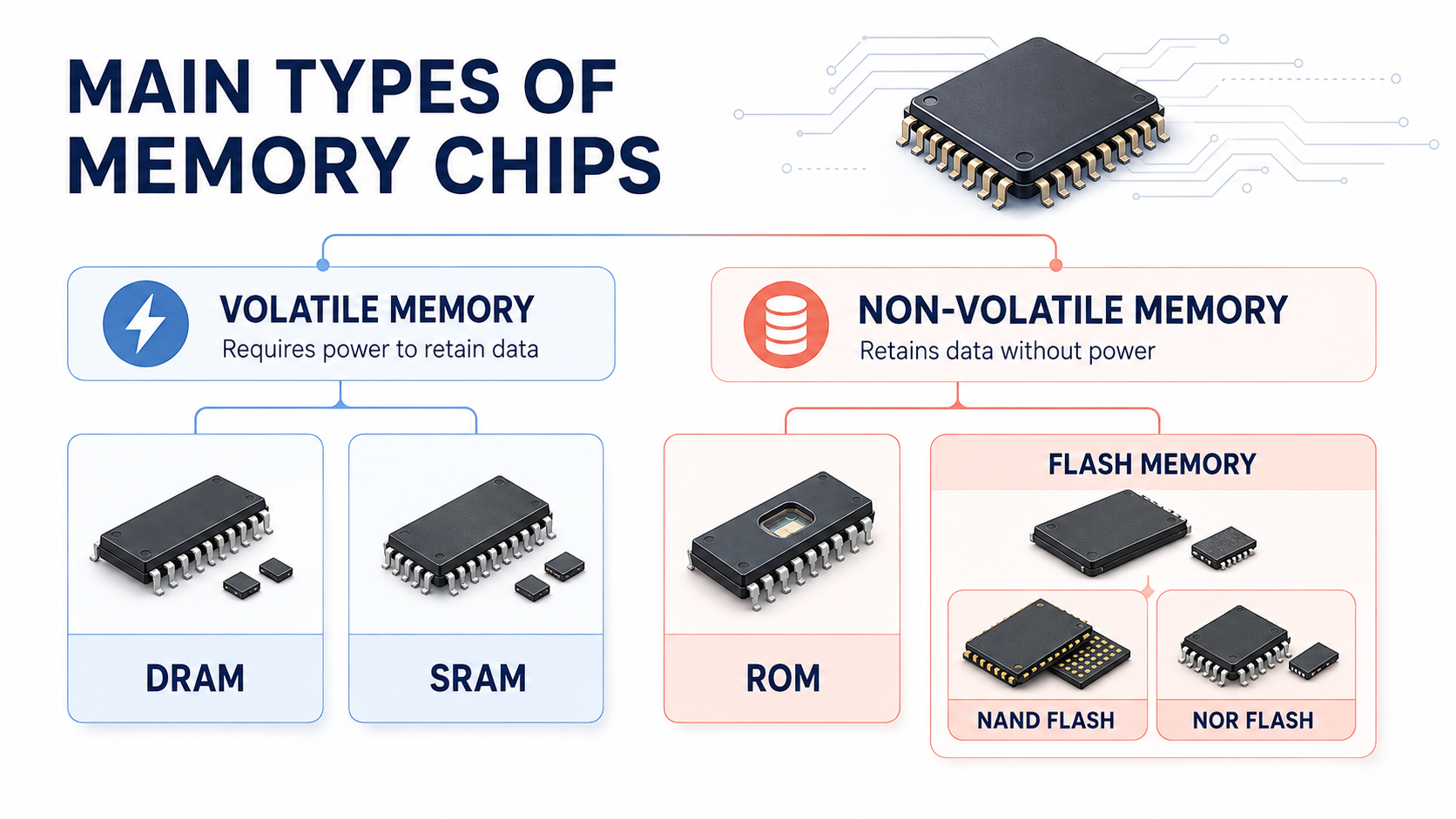
Memory chips are broadly categorized into two main types based on how they retain data: Volatile and Non-Volatile.
1. Volatile Memory
Volatile memory requires continuous power to retain the stored information. If the power is turned off or interrupted, all data is instantly lost. It is primarily used for temporary storage where speed is paramount.
- DRAM (Dynamic Random Access Memory): This is the most common type of system memory used in computers, laptops, and smartphones. DRAM is relatively inexpensive and offers high capacity, but it requires constant “refreshing” of electrical charges to keep the data intact, hence the term “dynamic.”
- SRAM (Static Random Access Memory): Unlike DRAM, SRAM does not need constant refreshing as long as power is supplied, making it faster and more reliable. However, it is more complex, physically larger, and more expensive to produce. It is typically used for CPU cache memory where blazing speed is crucial.
2. Non-Volatile Memory
Non-volatile memory retains its stored data even when the power is completely shut off. It is the backbone of permanent data storage.
- ROM (Read-Only Memory): Traditionally, ROM contained permanent, unalterable instructions programmed during manufacturing, such as a computer’s basic input/output system (BIOS).
- Flash Memory: A modern evolution of non-volatile memory, flash memory allows data to be erased and reprogrammed electronically. It is durable, fast, and lacks moving parts, making it ideal for portable devices.
- NAND Flash: This is the predominant technology behind USB flash drives, memory cards, and Solid-State Drives (SSDs). NAND flash is designed for high-density storage and rapid data writing and reading in large blocks, making it perfect for mass storage applications.
- NOR Flash: While NAND focuses on density, NOR flash offers faster random read speeds and allows for byte-level data access. It is often used to store executable code, such as firmware in cell phones and networking equipment, where quick and direct access to specific data points is necessary.
Key Characteristics of Memory Chips
When selecting memory chips for a specific application, several key characteristics must be balanced:
1. Capacity
Capacity refers to the sheer volume of data a chip can hold, measured in gigabytes (GB) or terabytes (TB). Servers and consumer storage devices prioritize high capacity to accommodate growing data demands, while simpler IoT devices may require much less.
2. Speed
Speed, or bandwidth, dictates how quickly data can be transferred to and from the memory chip. High speed is critical for tasks like video editing, gaming, and AI processing, where the CPU needs immediate access to large blocks of data.
3. Power
Power consumption is a vital metric, particularly for mobile and battery-operated devices. It mainly affects thermal performance, battery life, and system efficiency.
4. Durability
Durability, often measured in program/erase (P/E) cycles, indicates how many times a flash memory chip can be written to and erased before it degrades. This is a crucial factor for enterprise storage solutions and SSDs subjected to constant data turnover.
Applications of Memory Chips
Memory chips are ubiquitous, finding their way into nearly every sector of the modern economy.
1. Consumer Electronics
From the RAM that keeps your smartphone apps running in the background to the SSDs storing your operating system and personal files on a laptop, consumer electronics are heavily reliant on high-performance memory to deliver a smooth user experience.
2. Automotive Electronics
Modern vehicles are essentially computers on wheels. Memory chips are vital for advanced driver-assistance systems (ADAS), infotainment consoles, GPS navigation, and even essential engine control units, requiring high reliability and resistance to extreme temperatures.
3. Data Centers
The backbone of the cloud relies on immense server farms processing astronomical amounts of information. Data centers require massive arrays of high-capacity, durable SSDs and ultra-fast DRAM to manage, process, and serve data globally without interruption.
4. IoT and Edge
The IoT encompasses billions of connected devices, from smart thermostats to industrial sensors. These devices often utilize low-power memory chips to collect and temporarily store data at the “edge” of the network before transmitting it for broader analysis.
The Memory Market Landscape: Big Three Memory Brands
The global memory chip market is highly concentrated, dominated by three major memory chip companies known for pushing the boundaries of fabrication technology:
1. Samsung
A South Korean titan, Samsung is consistently the global leader in both DRAM and NAND flash production. They are renowned for their aggressive investment in research and development, frequently pioneering smaller process nodes and higher-density storage solutions.
2. SK Hynix
Also based in South Korea, SK Hynix is a formidable competitor, particularly strong in the DRAM sector. They are a major supplier for leading smartphone manufacturers and enterprise server companies, continuously driving innovations in memory bandwidth and efficiency.
3. Micron
Headquartered in the United States, Micron Technology is a crucial player across all memory types. They are highly respected for their advanced engineering and strategic partnerships, providing essential components for automotive, industrial, and consumer markets worldwide.
The Global Memory Chip Shortage 2026
In 2026, the global memory market is experiencing structural supply tightness as demand from AI infrastructure continues to reshape semiconductor capacity allocation. The rapid adoption of HBM3e and HBM4 for AI accelerators and hyperscale data centers has encouraged major memory manufacturers to prioritize high-bandwidth and high-density server memory. Because HBM requires more complex manufacturing and advanced packaging than conventional memory products, this shift is putting additional pressure on the supply of mainstream DRAM, legacy DDR4, and NAND Flash components.
For electronics manufacturers, the impact extends beyond higher prices. Longer and less predictable lead times, price volatility, and tighter factory allocations can make it difficult for mid-sized OEMs, industrial manufacturers, and other non-AI customers to secure the components they need. When a critical memory chip stock is unavailable, even a low-cost component can become a bottleneck that delays production and affects delivery schedules.
To manage these challenges, companies should move beyond single-source procurement and build greater supply-chain flexibility. Diversifying procurement channels and working with reliable independent electronic component distributors can provide access to spot inventory, small-batch quantities, alternative sourcing options, and components that may be difficult to obtain through traditional factory channels. This approach can help manufacturers reduce supply risk and maintain production continuity in a volatile memory market.
Mayhwa – Your Memory Chip Distribution Partner
Bridging the gap in today’s volatile market requires more than just a supplier. It requires a strategic partner. Faced with ongoing supply shortages and the often arrogant ordering thresholds set by industry giants, you need a trusted electronic component distributor. That’s where we step in.

At Mayhwa, we are dedicated to providing the global sourcing and supply chain solutions you need to keep your production lines moving. Our key brands include memory chips for Samsung, SK Hynix, and Micron.
Our support includes:
- Sufficient Inventory: We maintain over 3,000 SKUs in our Shenzhen and Hong Kong warehouses, allowing us to solve urgent RFQs and shortage issues rapidly. Our connections with 2,000+ global suppliers ensure a steady flow of necessary components.
- 1-Piece MOQ: We offer flexible support for small-batch and unsealed retail needs with absolutely no Minimum Order Quantity (MOQ) restrictions, filling the gaps left by traditional channels.
- Short Lead Time: Our agile responsiveness means lightning-fast delivery. We eliminate urgent supply chain bottlenecks so you can meet your deadlines without stress.
- Competitive Pricing: Through our extensive global network and efficient procurement processes, we secure high-quality components at prices that protect your bottom line.
- Original Manufacturer Sourcing:We strictly source from original manufacturers and authorized distributors. Every component undergoes rigorous, multi-step testing by our expert QC team, ensuring 100% authenticity, traceability, and absolute reliability.
Conclusion
Memory chips are the foundational building blocks of the modern digital era, enabling everything from simple mobile apps to complex AI algorithms. While the market is driven by immense technological advancements led by a few major players, global supply chain realities present ongoing challenges for manufacturers of all sizes. Navigating these challenges requires strategic sourcing and reliable partnerships.
Don’t let rigid supply chains or unexpected shortages dictate your success. Contact Mayhwa today to discover how our extensive inventory, flexible terms, and unwavering commitment to quality can secure your memory chip supply and drive your projects forward.