Embedded applications rarely depend on processing capability alone; the microcontroller also has to fit the communication architecture, memory requirements, power budget, peripherals, and physical design of the finished board. STM32 families cover a broad range of embedded tasks, so selecting a suitable device calls for more than comparing clock frequencies or package sizes.
Buyers researching ST micro distributors may encounter numerous options that appear similar at first glance. At Mayhwa, we approach component sourcing by examining the actual technical requirements behind the part number, helping us distinguish application needs from simple catalog comparisons.
Understanding STM32 Microcontroller Architecture
An STM32 microcontroller integrates processing, memory, peripherals, and control functions within a single device. Depending on the family, designers may find Arm Cortex-M cores with different performance levels, memory configurations, security features, analog functions, timers, and communication interfaces. Such variety allows the same broad product family to serve applications ranging from basic control boards to sophisticated embedded platforms.
Clock speed provides only one indication of processing capability. A system handling motor control, signal processing, networking, or graphical interfaces may place very different demands on the processor. Core architecture, Flash capacity, SRAM, peripheral availability, and instruction efficiency can influence real-world performance just as significantly.
Peripheral selection deserves early attention because it affects the surrounding hardware. UART, SPI, I2C, CAN, USB, timers, ADCs, and PWM resources can determine whether additional external components are needed. A stmicroelectronics distributor can provide access to different device variants, but the final choice should begin with a clear list of interfaces required by the application.
Matching Performance With Application Requirements
Memory planning is often more revealing than a simple processor-speed comparison. Flash stores firmware and other persistent program information, while SRAM handles runtime data such as variables, communication buffers, and temporary calculations. Applications with expanding software functions may require more memory headroom than a basic controller performing a narrow set of operations.
Power consumption introduces another design trade-off. Battery-operated products generally prioritize efficient operating modes and controlled wake-up behavior, while industrial equipment connected to a stable power source may place greater emphasis on processing capability and peripheral integration. Designers should examine active, idle, and low-power operating characteristics according to the system’s actual duty cycle.
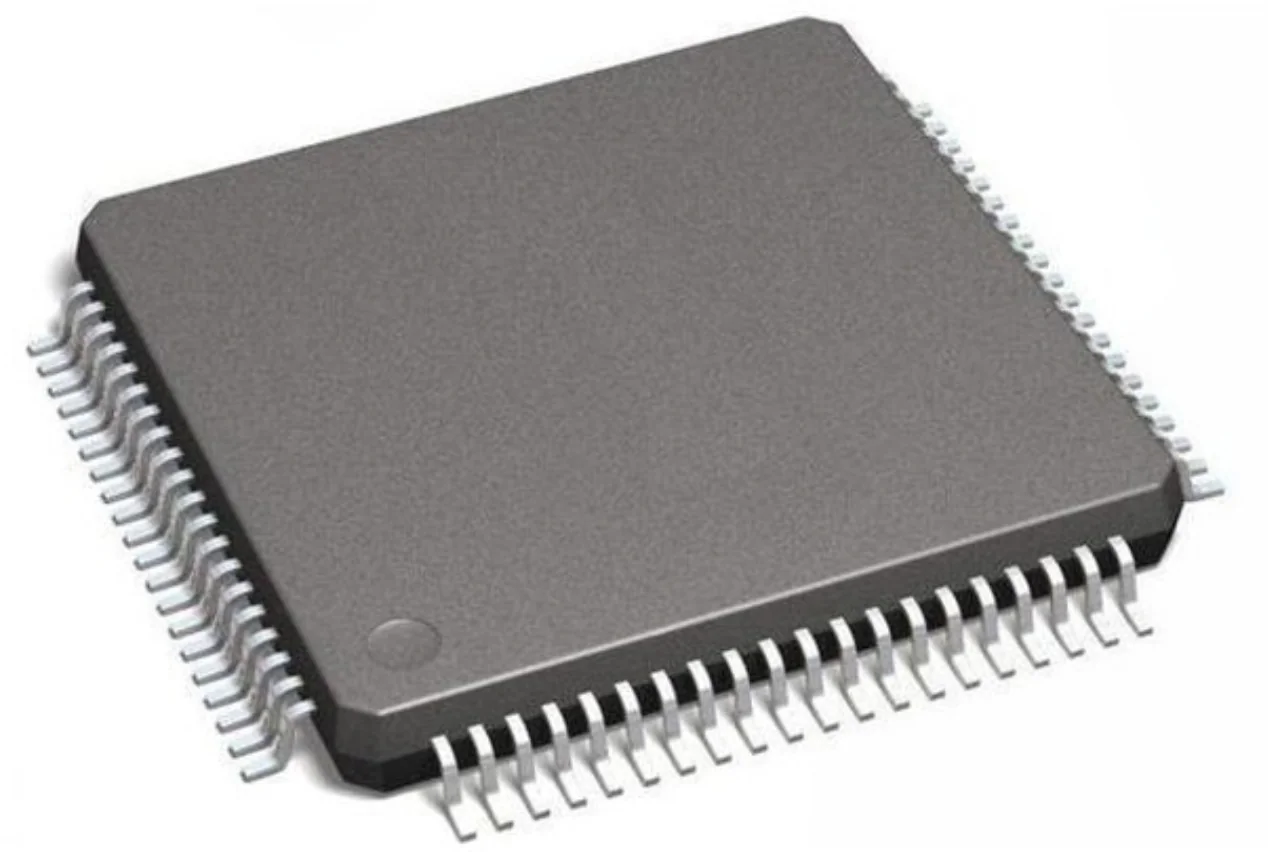
Package selection can influence PCB layout and production as well. Pin count, package dimensions, thermal behavior, and available GPIO resources all interact with the board architecture. ST micro distributors can be useful during sourcing comparisons, but a package should be selected only after the electrical and mechanical requirements have been defined.
Considering Real-World Embedded Functions
Communication requirements often determine the most practical MCU family. A controller used in industrial networking may require interfaces that differ from those needed by a consumer sensor or a small automation module. Checking the number and type of available communication peripherals early can prevent unnecessary redesign later.
Analog functions deserve similar attention in systems connected to physical sensors. ADC resolution, sampling behavior, reference arrangements, and analog input resources can influence measurement quality. Applications involving motor control may instead place greater emphasis on timers, PWM channels, and specialized control peripherals.
A useful evaluation should also consider development support. Debug interfaces, configuration tools, software libraries, middleware, and programming environments can affect how efficiently a development team brings firmware from prototype to production. Stmicroelectronics distributor searches may help identify sourcing options, while the engineering workflow should be assessed separately through official technical documentation and development resources.
Evaluating Components Before Purchase
Part-number precision becomes important once a suitable MCU family has been identified. Variations in memory size, package, temperature range, peripheral configuration, and ordering format can distinguish devices that otherwise share a similar family name. A purchasing specification should preserve the complete ordering code instead of shortening it to a generic family reference.
Supply information also deserves structured review. Stock status, packaging format, manufacturer identification, and available documentation can influence prototype schedules and production planning. ST micro distributors may represent one sourcing route, while buyers can compare other channels according to their procurement requirements and verification procedures.
At Mayhwa, we review component specifications together with sourcing and inventory information. Our approach considers manufacturer data, exact ordering codes, package details, and project requirements before a component is treated as a practical procurement option. Keeping these factors connected gives us a clearer basis for supporting customers who need specific semiconductor components rather than broad product categories.
Conclusion
An STM32 selection decision is ultimately a system-design question rather than a contest between isolated specifications. Processing capability, memory, communication interfaces, analog resources, power behavior, package constraints, and development requirements each contribute to the suitability of a microcontroller. A device with impressive specifications may still be inappropriate if its peripherals or physical characteristics do not match the board.
Sourcing should follow the same level of precision. Stmicroelectronics distributor searches can open several procurement possibilities, while ST micro distributors may be evaluated according to documentation, availability, traceability, and ordering accuracy. At Mayhwa, we take an application-focused approach to component sourcing, connecting the exact characteristics of semiconductor devices with the practical requirements of the embedded systems in which they will operate.