Industrial controllers and IoT edge devices often need to process sensor data, manage communications, and react to events within a short time. The MCU must handle these tasks without making the board too large or the design too complicated. Processor speed matters, but memory, analog resources, timers, interfaces, package size, and operating range also affect the hardware plan.
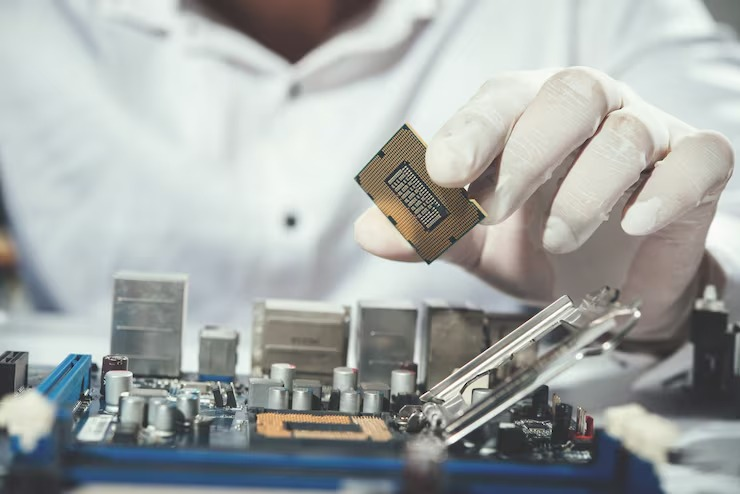
For engineers comparing 32-bit controllers, the STM32F405RGT6 Cortex-M4 Microcontroller MCU combines processing capability with broad peripheral integration. It can support real-time control, motor-related functions, data acquisition, and connected edge processing. Looking at the device as a complete control platform is more useful than focusing on clock speed alone.

Processing Capacity for Real-Time Workloads
The STM32F405RGT6 uses an Arm Cortex-M4 core with a single-precision floating-point unit and DSP instructions. It operates at up to 168 MHz and can reach 210 DMIPS. These resources matter when firmware must run control loops, signal processing, calculations, and communication routines in the same system.
Its ART Accelerator supports zero-wait-state execution from Flash memory. The device also includes 1 Mbyte of Flash and 192+4 Kbytes of SRAM. This gives designers room for control logic, communication stacks, buffers, and real-time operating system tasks.
From our sourcing perspective at Mayhwa, these specifications are relevant when customers compare controllers for industrial automation, connected equipment, or embedded systems with several software functions. We suggest reviewing actual firmware load, memory use, and interface requirements before confirming a part number.
Analog and Timing Resources in Control Systems
Industrial equipment often needs to read analog signals and generate precise timing signals. This device integrates three 12-bit ADCs with up to 24 channels and two 12-bit DACs. The combination can support sensor measurement, feedback circuits, and analog control functions while limiting extra external components.
The MCU also provides up to 17 timers. Some include motor-control PWM outputs and encoder interfaces. This makes the device relevant for motor control, motion systems, and other applications where timing accuracy and repeated control cycles matter.
For engineers evaluating a STMicroelectronics Cortex-M4 32-bit MCU, the timer structure deserves attention alongside the processor core. A design may need several PWM channels, encoder feedback, periodic interrupts, or synchronized measurements. Mapping these resources early can reduce later redesign work.
Connectivity Shapes the Board Architecture
Modern embedded equipment often connects with sensors, actuators, displays, gateways, and service interfaces. The STM32F405RGT6 supports up to three I2C interfaces, six USART/UART interfaces, three SPI interfaces, two CAN interfaces, and USB OTG controllers. This range gives designers several ways to organize board-level communication.
CAN can be useful in industrial and automotive-related control environments. SPI and I2C can connect sensors, converters, memory devices, or peripheral controllers. USART and UART channels can support modules, diagnostics, and serial communication. USB OTG adds another option for data transfer or device interaction.
The practical issue is not simply the number of interfaces. Engineers should check pin mapping, simultaneous peripheral use, board routing, and firmware requirements. A controller may list many interfaces, but the final design still depends on how those functions share pins and resources.
Package Size and Operating Conditions
The device is supplied in a 64-pin LQFP package measuring 10 x 10 mm and offers 51 programmable I/O ports. This package can suit systems where board space is limited but a broad set of digital and peripheral connections is still needed.
Its supply range is 1.8 V to 3.6 V, while the supported industrial temperature range is -40°C to 85°C. These details matter for factory equipment, gateways, monitoring hardware, or products exposed to changing environmental conditions.
The part complies with RoHS and Ecopack2 requirements. Buyers working on projects with material-compliance documentation can include these points in their component review. Package code, temperature grade, and compliance information should be checked together with electrical requirements.
Procurement Questions Beyond the Datasheet
Technical fit is only one part of component selection. Availability, delivery schedule, source traceability, and purchasing flexibility also matter, especially when a project moves from prototype to production. The STM32F405RGT6 is listed as available in the product information provided for this project.
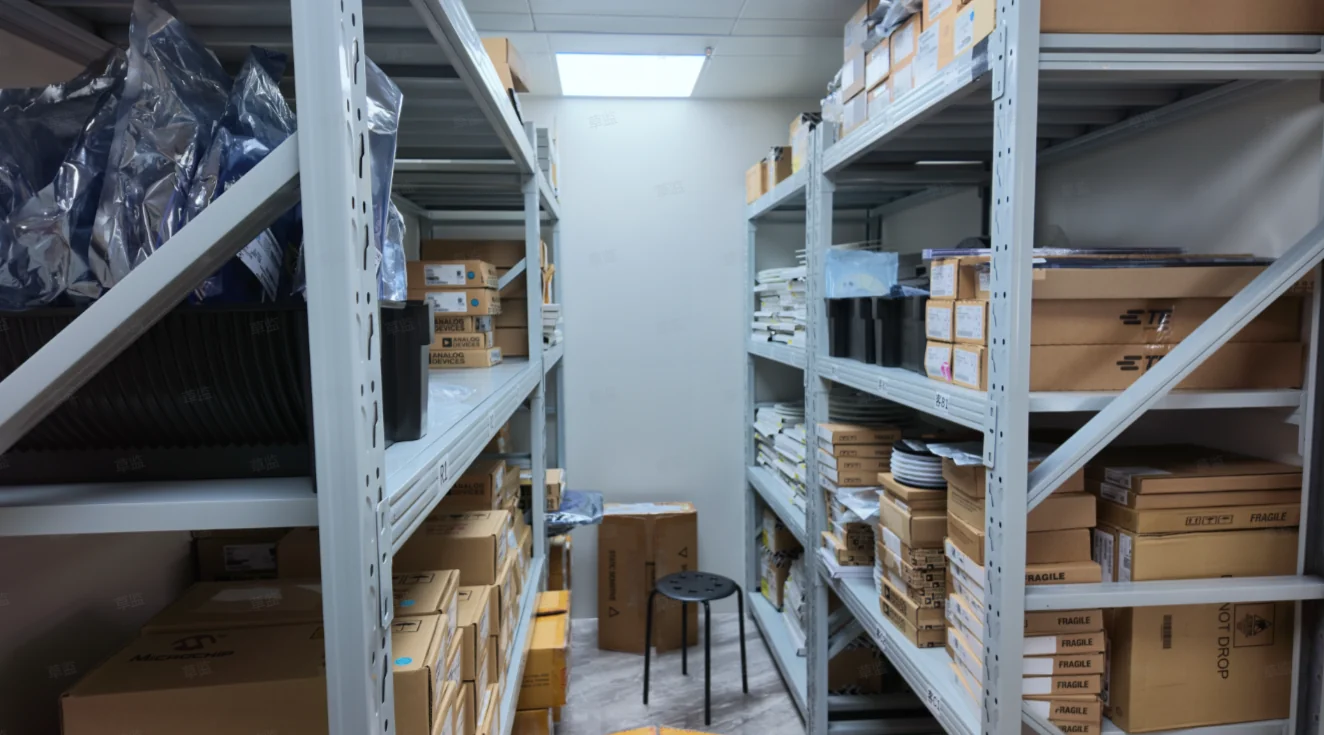
At Mayhwa, we work with a global supplier network and maintain inventory across our Shenzhen and Hong Kong warehouses. This supports urgent quotations, sample requests, and shortage-related sourcing needs. For B2B buyers, the first step should still be confirming the exact model, package, quantity, and required delivery window.
When customers request the STM32F405RGT6 Cortex-M4 Microcontroller MCU, we can discuss sourcing conditions together with project timing. This helps when engineering teams have finished the design and purchasing teams need to compare stock status, delivery time, and commercial terms.
A Practical Basis for Device Evaluation
The STMicroelectronics Cortex-M4 32-bit MCU combines a 168 MHz core, FPU and DSP support, substantial memory, mixed-signal resources, timers, and several communication interfaces in a compact 64-pin package. These characteristics make it relevant to industrial control, motor-related systems, and IoT edge designs that need several functions on one controller.
For project teams, a sound choice comes from matching the device to real requirements rather than selecting it from one headline specification. Processing load, memory, interfaces, analog channels, package size, temperature range, stock, and delivery timing should be reviewed together. This gives engineering and procurement teams a clearer basis for evaluating the part.