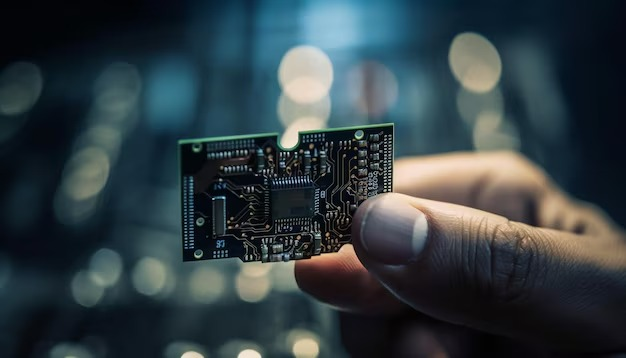
Compact control boards need a practical balance between processing speed, memory, peripheral resources, board space, and power use. MCU choice affects the design path, from sensor reading and signal handling to interface control and debugging. For industrial developers, the device should match the real workload instead of adding functions that will remain unused.
Entry-level 32-bit devices remain useful in many embedded projects. They can support control logic, data acquisition, simple user interfaces, and communication tasks without making the hardware structure complex. When we evaluate a device for B2B sourcing, we also look at package format, voltage range, temperature range, and supply availability.
Start With the Actual Control Task
A compact control board may handle switches, sensors, relays, indicators, motors, or a small display. Before comparing MCU families, engineers should list the required inputs and outputs, timing needs, interfaces, expected program size, and response speed. This helps avoid choosing a device that is too limited or unnecessarily complex.
The STM32F030C8T6 Cortex-M0 Microcontroller MCU combines a 32-bit Arm Cortex-M0 core with a CPU frequency of up to 48 MHz. It also provides 64 KB Flash and 8 KB SRAM. These resources suit many general embedded control tasks where the program structure is clear and memory demand remains moderate.
At Mayhwa, we often see industrial customers compare MCUs by function rather than clock speed alone. Processing capability matters, but integrated peripherals can reduce external components. That can simplify board layout and make the bill of materials easier to manage during purchasing.
Peripheral Resources Shape the Board
The device integrates a 12-bit ADC for analog signal measurement in sensor input, voltage monitoring, and simple feedback control. It also includes 16-bit timers and PWM functions. These features are useful where the board needs timing control, pulse generation, or basic motor and actuator control.
The MCU also provides multiple communication interfaces with flexible GPIO resources. One controller can connect with several external devices while leaving pins available for switches, status indicators, or control signals. This can reduce pressure on board space in compact designs. Interface planning also helps engineers reserve enough pins for later firmware changes or optional functions.
This combination makes the STMicroelectronics Cortex-M0 32-bit MCU relevant to embedded control, user-interface functions, industrial equipment, and other cost-sensitive designs. Designers can match built-in resources with the circuit and avoid extra interface or timing devices when the MCU already covers those functions.
Package Choice Affects Integration
STM32F030C8T6 is supplied in an LQFP-48 package with a 7 × 7 mm body size. This format offers 48 pins while keeping the footprint manageable for small control boards and dense layouts.
LQFP packaging gives engineers visible leads around the package edge. That can help during prototyping, inspection, rework, and production debugging. For projects moving from engineering samples to batch assembly, package familiarity can also support manufacturing preparation. It is also useful to check footprint dimensions and assembly capability before the design is released.
The 48-pin format provides practical I/O capacity for general embedded systems. Engineers still need to map each pin carefully. ADC channels, timer functions, communication interfaces, debugging pins, and GPIO assignments should be reviewed together before PCB layout is fixed.
Power and Environment Need Early Review
The MCU operates from 2.4 V to 3.6 V. This range fits common low-voltage embedded power architectures, but the regulator and connected peripherals still need to match the board design. Interface voltage levels also deserve attention when several devices share one system.
Its specified operating temperature range is -40°C to +85°C. For industrial equipment, this rating should be considered with enclosure design, ventilation, nearby heat sources, and the ratings of surrounding components.
Sleep, Stop, and Standby modes provide options for reducing power use during inactive periods. These modes can matter in controllers that wait for a trigger, sensor event, or communication request. Power planning should still consider the complete board rather than the MCU alone.
Development Access Also Matters
STM32F030C8T6 supports SWD for in-circuit debugging and programming. This gives engineers a direct path for firmware loading, testing, and fault diagnosis during board development.
For teams comparing the STM32F030C8T6 Cortex-M0 Microcontroller MCU with other entry-level devices, the development workflow should be reviewed beside hardware specifications. Memory size, timer resources, ADC capability, GPIO count, communication needs, and debugging access all affect how well the MCU fits the project.
From a sourcing perspective, the STMicroelectronics Cortex-M0 32-bit MCU should also be checked against required quantity, project timing, and approved supply channels. We recommend linking technical selection with purchasing needs early, especially for industrial programs that may move from samples to repeated production orders.
A Practical View for B2B Projects
For compact embedded control, the device combines a 48 MHz Cortex-M0 core, 64 KB Flash, 8 KB SRAM, analog conversion, timers, PWM, communication interfaces, low-power modes, and a 48-pin package. The value of these resources depends on how closely they match the real control task and board architecture.
At Mayhwa, we support customers with component sourcing, urgent quotations, samples, and supply-chain coordination. When this MCU is part of a new industrial or server-related design, we suggest reviewing both circuit requirements and the purchasing plan. A well-matched device can simplify development while giving procurement teams a clearer basis for price, delivery timing, and quality discussions.