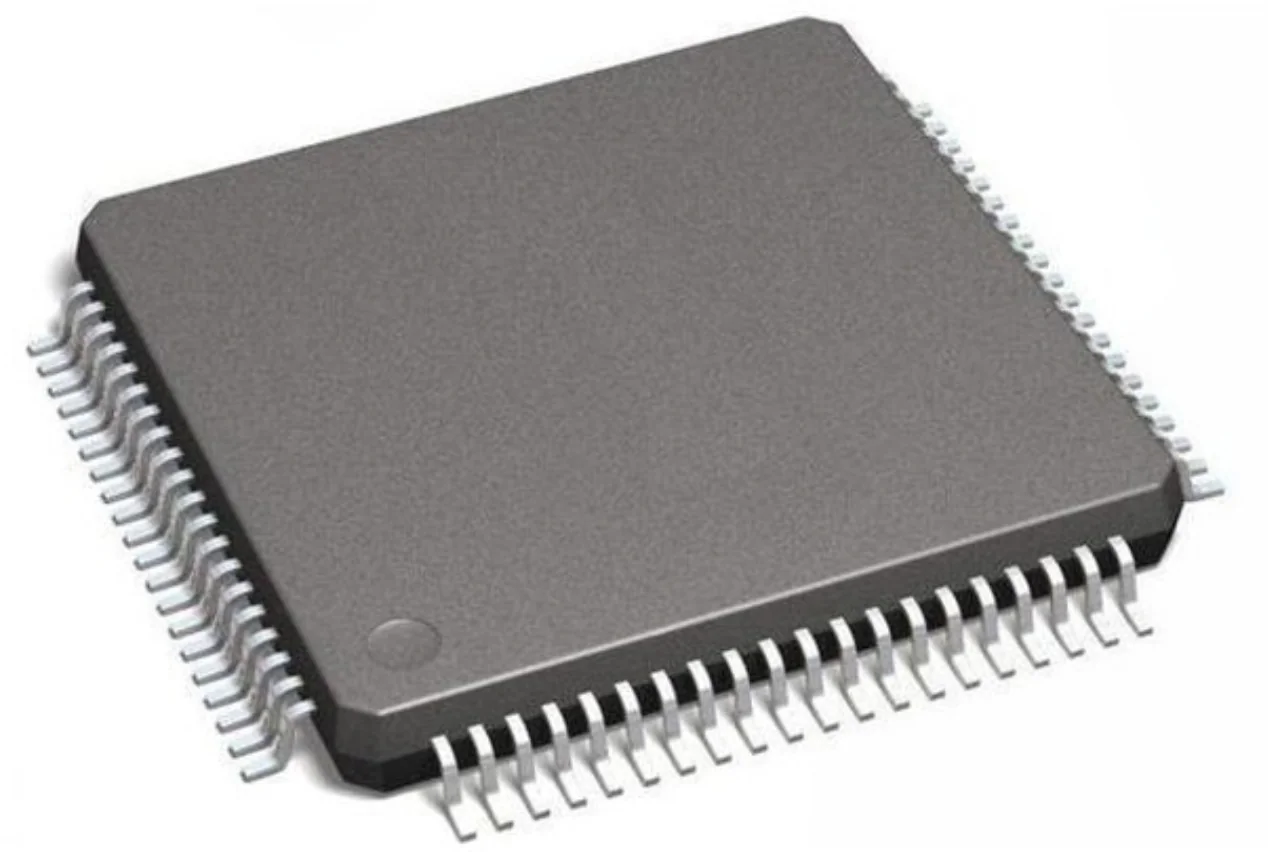
As the semiconductor industry enters the final quarter of 2026, the DRAM market finds itself at a pivotal inflection point. Hyperscale cloud providers and AI system integrators continue to expand their infrastructure, placing unprecedented pressure on memory supply chains. The rapid adoption of AI workloads has disrupted traditional DRAM seasonal cycles, creating an immediate Q4 supply crunch that will reverberate through 2027. This guide analyzes the strategic positioning of top DRAM manufacturers, key supply chain risks, and critical market trends.
Top 3 DRAM Manufacturers
The global DRAM oligopoly, comprising SK Hynix, Samsung Electronics, and Micron Technology, controls over 90% of the worldwide market share. However, their competitive dynamics have shifted significantly due to differing execution speeds in HBM packaging and advanced lithography transition.
1. SK Hynix

Holding approximately 35.5% of the global DRAM revenue, SK Hynix has established a formidable position at the top of the industry, driven largely by its early leadership in high-margin stacked memory. Its product strategy heavily prioritizes enterprise and AI platforms, featuring premium HBM3e and early 16-hi HBM4 samples alongside server-grade DDR5 RDIMMs and low-power LPDDR5T/5X modules for on-device AI.
Technologically, SK Hynix maintains an industry-leading position in HBM packaging due to its proprietary Advanced Mass Reflow Molded Underfill (MR-MUF) technology, which delivers exceptional thermal dissipation and superior stack yields on its advanced 1 β nm process node.
To maintain this momentum, the company’s capital expenditures remain heavily directed toward cleanroom expansion at the Yongin Semiconductor Cluster and its M16 fab, prioritizing Through-Silicon Via (TSV) capacity over conventional DRAM. Supported by long-term supply agreements with primary AI accelerator vendors, SK Hynix enters Q4 2026 with strong valuation metrics and high operating margins.
Looking into 2027, the primary constraint facing SK Hynix is its high exposure to hyperscaler CapEx and a tightly allocated cleanroom capacity, which limits its ability to dynamically pivot back to high-volume consumer memory should AI demand fluctuate.
2. Samsung Electronics

Samsung Electronics continues to maintain the largest total manufacturing capacity in the industry, holding around 37.0% of the market share. Its comprehensive portfolio covers the entire spectrum of memory technology, spanning HBM3e and HBM4 to high-density 32Gb monolithic DDR5, GDDR7, and high-volume legacy DDR4.
Samsung’s manufacturing approach relies on aggressive Extreme Ultraviolet (EUV) lithography deployment across multiple layers on its 1 α and 1 β nm nodes, which initially introduced yield challenges in complex 12-layer HBM3e stacks before stabilizing in mid-2026.
Leveraging its unmatched manufacturing footprint across Pyeongtaek (P3, P4) and Xi’an, alongside substantial financial resources and vertically integrated bundled solutions (combining DRAM, NAND, and Foundry), Samsung remains a formidable force in hyperscale data centers and mobile client devices. A strong Q4 2026 rebound driven by rapid enterprise adoption of its 32Gb monolithic DDR5 modules has re-accelerated its revenue momentum. As its expanded HBM4 production lines come fully online, Samsung is well-positioned to leverage its sheer volume scale to re-establish market share leadership in overall DRAM revenue throughout 2027.
3. Micron Technology

Micron Technology controls approximately 22.5% of global DRAM revenue, carving out a distinct strategic niche through superior energy efficiency and targeted high-margin deployments. By strategically bypassing early EUV layers in favor of advanced DUV immersion multi-patterning on its 1β nm node before introducing EUV on its 1γ nm node, Micron achieved strong unit economics and market-leading power efficiency.
Its key product portfolio focuses on energy-optimized HBM3e (claiming up to 30% lower power consumption than legacy competing products), 192GB/256GB DDR5 server RDIMMs, high-density mobile LPDDR5X, and automotive-grade LP-DRAM.
Micron’s capital strategy is heavily bolstered by U.S. CHIPS Act funding supporting fab construction projects in Boise, Idaho, and Clay, New York, alongside ongoing site expansions in Taichung, Taiwan. Commercial operations deliberately target high-margin enterprise data center and automotive applications, deliberately limiting exposure to low-margin commodity consumer electronics.
Although Micro’s overall wafer throughput remains smaller than its South Korean competitors, capping its total market share potential, high fab utilization rates in Q4 2026 and the gradual 1γ nm EUV ramp in 2027 ensure strong positioning for long-term North American hyperscale contracts.
Specialty and Industrial DRAM Manufacturers
While the Top 3 focus on high-density and stacked AI memory, specialty manufacturers serve consumer electronics, industrial automation, automotive, and networking equipment.
- Winbond Electronics (Taiwan): Focuses on specialty and low-to-medium-density DRAM, including DDR3, DDR4 and LPDDR4/4X. Its 16nm 8Gb DDR4 product targets industrial and embedded applications. It is best suited to buyers requiring mature products and long-term support, rather than HBM or high-volume AI server memory.
- Nanya Technology (Taiwan): Concentrates on conventional DRAM and benefits when larger manufacturers reduce legacy-product allocations. Its Q2 2026 revenue increased 68.2% quarter over quarter, while bit shipments remained flat, illustrating how pricing can drive revenue independently of volume.
- CXMT(China): Has expanded its position in domestic DRAM markets, particularly mobile and conventional memory, and is developing more advanced products. Counterpoint estimated its Q2 2026 global DRAM revenue share at approximately 10%, up from 4% in Q2 2025. Its competitive relevance is growing, although advanced-node performance, yields, customer qualification and access to manufacturing equipment remain constraints.
Manufacturer | Region | Est. Market Share (Q4 2026) | Core Strengths | Key Applications | Sourcing Risk Level (2027) |
SK Hynix | South Korea | ~35.5% | HBM3e/HBM4 leadership, MR-MUF yield efficiency | AI Accelerators, Enterprise Servers | High |
Samsung Electronics | South Korea | ~37.0% | Massive global capacity, 32Gb monolithic die scale | Hyperscale Data Centers, Premium Mobile | Moderate-High |
Micron Technology | United States | ~22.5% | Low-power 1β nm efficiency, US fab footprint | AI Servers, Automotive, High-End PCs | Moderate-High |
CXMT | China | ~4.0% | High domestic capacity, price competitiveness in DDR4 | Mainstream PCs, Mobile, Regional Data Centers | High |
Nanya Technology | Taiwan | ~1.0% | Stable specialty DDR3/DDR4 supply | Networking, Consumer Devices | Low-Moderate |
Winbond Electronics | Taiwan | <1.0% | Proprietary low-power HyperRAM, custom die size | Industrial IoT, Automotive, Embedded | Low |
Four Critical DRAM Market Trends Shaping 2026 Q4 & 2027
Trend 1: The DDR4-to-DDR5 Rapid Transition
The market shift from DDR4 to DDR5 has reached its final structural phase. By Q4 2026, DDR5 market penetration in data centers exceeds 75%, driven by Intel’s Xeon (Emerald Rapids/Granite Rapids) and AMD’s EPYC (Genoa/Turin) platform deployments.
- Deprioritization of DDR4: Major IDMs (Samsung, SK Hynix, Micron) have converted the vast majority of their primary 1αand 1β nm wafer lines to DDR5 and HBM.
- Pricing Inversion: While DDR4 was historically cheaper, capacity reductions have caused DDR4 spot prices to stabilize or rise relative to historical trends, creating a “legacy premium”for older industrial platforms that cannot easily migrate to DDR5.
Trend 2: The HBM Capacity Squeeze
HBM production requires approximately 3x the wafer capacity of standard DRAM to produce the equivalent bit output due to larger die size, lower die-per-wafer yields, and complex TSV stacking.
- The Wafer Cannibalization Effect: As SK Hynix, Samsung, and Micron lock in 2027 HBM production capacity with major GPU vendors, standard server and PC DRAM lines are deprived of advanced node wafers.
- Market Impact: This dynamic places an artificial floor under standard DRAM market trends 2026 prices, preventing oversupply even during periods of moderate consumer PC/mobile demand.
Trend 3: CXL 2.0 Gaining Ground
Compute Express Link (CXL 2.0 and emerging CXL 3.0) standards have transitioned from proof-of-concept to commercial server deployments in late 2026.
- Memory Pooling & Expansion: CXL controllers allow hyperscalers to attach disaggregated E3.S DRAM pools via PCIe 5.0/6.0 interfaces, bypassing traditional CPU socket memory channel limits.
- Impact on DRAM Types: Increases demand for specialized DDR5 DRAM controller-based expansion modules (Type 3 devices), altering traditional server DIMM purchasing patterns.
Trend 4: DRAM Supply, Pricing, and Market Dynamics
Following the dramatic cyclical recovery from 2024 to 2025, the DRAM market in late 2026 exhibits controlled price growth:
- Q4 2026 Pricing Environment: Blended DRAM Contract Average Selling Prices (ASPs) are projected to rise 3% to 8% quarter-over-quarter in Q4 2026, primarily supported by enterprise server DDR5 demand and tight HBM allocations.
- 2027 Pricing Forecast: The first half of 2027 is expected to see mid-single-digit price stability, followed by upward pressure in H2 2027 as HBM4 ramps commercial shipments.
- Financial Performance & Stock Indicators: Major market indexes and DRAM stock price valuations reflect strong cash flow profiles for top memory suppliers, supported by sustained enterprise gross margins above 45%.
Solving Your DRAM Supply Chain Challenges with Mayhwa
Navigating lead-time volatility, product end-of-life (EOL) for DDR4, and allocation shortages in late 2026 requires agile procurement solutions. Independent semiconductor distributors play a vital role in bridging supply gaps between Tier-1 IDMs and enterprise buyers.
Mayhwa operates as a global independent distributor of electronic components, providing specialized sourcing solutions for high-demand memory products:
- Hong Kong Hub: Strategically located near Asia’s primary assembly and testing hubs, Mayhwa’s Hong Kong distribution facility maintains inventory buffers for hard-to-source DDR4, DDR5, and mobile LPDDR components, enabling rapid dispatch during end-of-year production spikes.
- 100% Anti-Counterfeit & Quality Inspection:To combat gray-market risks associated with memory supply tightness, Mayhwa implements rigorous quality control protocols. Testing includes visual inspection, X-ray analysis, decapsulation, and functional parametric verification in AS9120/ISO9001 certified lab environments.
- High-Demand DRAM Part Numbers Ready for Sourcing:
- Enterprise DDR5 Server Modules: High-density 32GB, 64GB, and 128GB RDIMMs (Samsung / SK Hynix / Micron).
- Automotive & Industrial LPDDR4X/LPDDR5: Wide-temperature grade chips for edge compute platforms.
- Legacy DDR4 Components: Critical 8Gb and 16Gb dies (Nanya, Winbond, Micron) for embedded and networking platforms facing factory allocation cuts.
With prices rising and lead times tightening through 2027, now is the time to partner with a trusted distributor. Contact Mayhwa today to explore how we can support your sourcing needs!
References
- https://www.sphericalinsights.com/blogs/top-20-companies-global-dynamic-random-access-memory-dram-market-in-2026-2035-spherical-insights-analysis
- https://www.fortunebusinessinsights.com/dram-market-109251
- https://www.ersaelectronics.com/blog/Memory-Chip-Manufacturers?srsltid=AU7gw4W7NWX1PieqMp_wE7ebWn0EVz6SDI_jQdPik4KIR9R6orWbBbng
- https://www.mordorintelligence.com/industry-reports/dynamic-random-access-memory-market/companies
- https://www.trendforce.com/news/2026/10/20/news-dram-prices-seen-rising-20-qoq-in-4q26-despite-slower-gains-ai-demand-tight-supply-support-outlook/