Industrial controllers often need to process sensor data, react to changing conditions, and communicate with other equipment at the same time. A controller needs balanced processing power, memory, interfaces, and board-level compatibility.
When evaluating the STM32F407VGT6 Cortex-M4 Microcontroller MCU, engineers should consider whether its processing capabilities, memory capacity, and peripheral interfaces can support the specific control tasks and communication requirements of their system.
Matching Processing Resources to Control Tasks
Real-time control can place several demands on one processor. Motor control may require fast calculations and precise timer operation. Data acquisition may depend on ADC resources and DMA. Communication tasks can also consume processing time when several interfaces operate together. This makes the internal architecture of the MCU important during early system planning.
The STM32F407VGT6 uses an Arm Cortex-M4 core with DSP instructions and a single-precision FPU. Its CPU can operate at up to 168 MHz. These resources support control algorithms, filtering, signal processing, and mathematical operations without forcing designers to split basic tasks across several devices.
Memory also affects system structure. The device integrates 1 MB Flash and 192 KB SRAM. Flash capacity gives developers room for firmware, communication stacks, control logic, and system functions. SRAM supports runtime data, buffers, calculations, and temporary storage. Engineers still need to estimate code size and memory use before finalizing the design.
Peripheral Resources Shape System Integration
Processor performance is only one part of an embedded controller. Industrial boards often connect sensors, motors, displays, communication modules, and external memory. The STMicroelectronics Cortex-M4 32-bit MCU provides timers, DMA, 12-bit ADC and DAC resources, CAN, Ethernet, USB OTG, SPI, I²C, and USART interfaces.
This peripheral mix can reduce the need for extra interface devices in some designs. CAN may suit machine or vehicle communication, while Ethernet can support networked equipment. SPI and I²C can connect local sensors, converters, or memory devices. USART interfaces can support serial links to modules and service equipment.
The device also provides 82 GPIOs. That pin count gives engineers room to manage control signals, status inputs, relays, indicators, and peripheral connections. Pin planning should still be completed early because alternate functions can share physical pins. A clear I/O map helps prevent conflicts before PCB work progresses.
Board Layout Starts with the Package
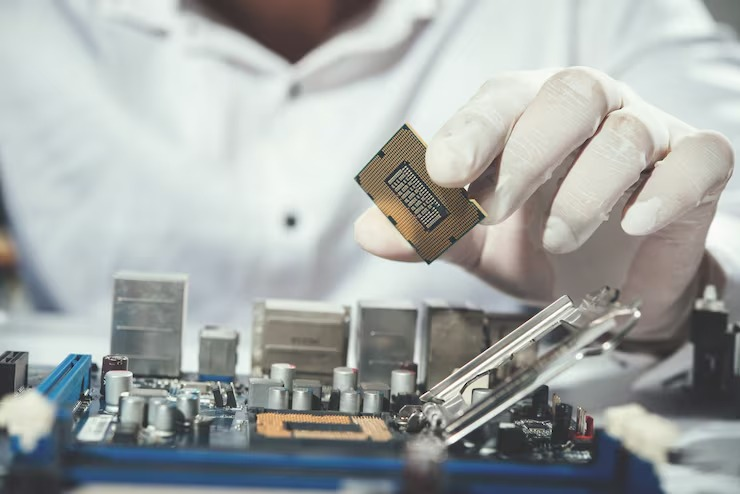
The MCU comes in a 100-pin LQFP package with a 14 × 14 × 1.4 mm body size. Its leads are visible around the package edge, which can support inspection, prototyping, and conventional PCB assembly processes.
A 100-pin device also requires disciplined routing. Designers need to plan power and ground connections, clock paths, decoupling capacitors, communication lines, and analog sections before filling the board with secondary components. Keeping noisy digital paths away from sensitive analog signals can make board bring-up easier.
Operating conditions also matter. The device works from 1.8 V to 3.6 V and is specified for -40°C to +85°C industrial-grade operation. These limits should be reviewed together with the power architecture, enclosure conditions, thermal environment, and ratings of surrounding components.
Where This MCU Fits in Industrial Systems
The STM32F407VGT6 Cortex-M4 Microcontroller MCU can support industrial control, motor control, communication gateways, and measurement equipment when its resources match the workload. A motor controller, for example, may use timers for PWM generation, ADC channels for current or voltage feedback, DMA for data movement, and the FPU for control calculations.
A gateway design may place more emphasis on CAN, Ethernet, USART, and buffering. Measurement equipment may depend more heavily on ADC resources, timers, processing routines, and data transfer. The same MCU can serve different roles, but the surrounding firmware and board design determine how effectively those resources are used.
This is why component selection should begin with a task list rather than a single headline specification. Engineers can map processing demand, memory use, I/O count, communication interfaces, power conditions, and package constraints before deciding whether the device suits the project.
Procurement Checks Before a Design Is Released
Technical fit does not remove the need for sourcing checks. Buyers should confirm the complete part number, manufacturer, package, temperature range, and description before placing an order. For this device, the description is a 32-bit MCU with 1 MB Flash in a 100-LQFP package.
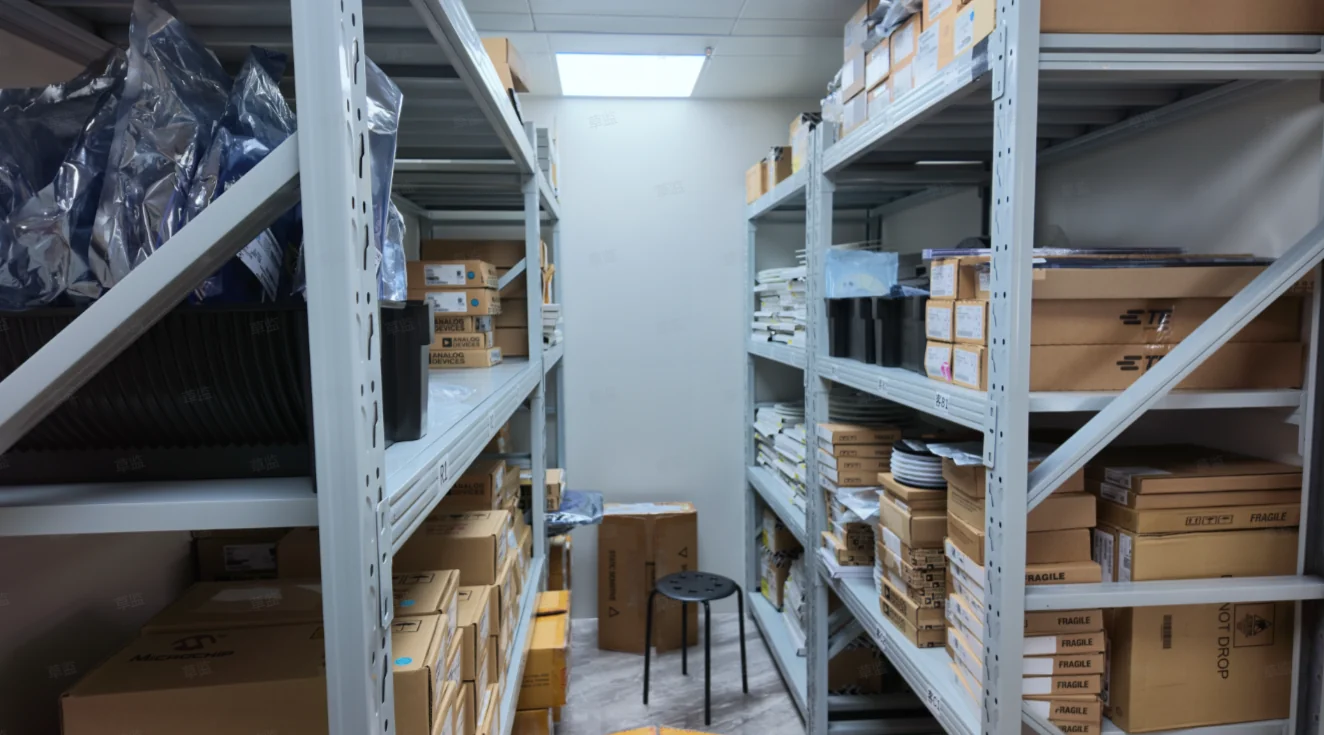
At Mayhwa, we support B2B customers that need electronic component sourcing and supply-chain assistance. Our supplier network includes more than 2,000 sources, and we also purchase inventory through channels such as Avnet, Arrow, Future, and WPG. This can help when customers are handling urgent quotations, sample requests, or supply shortages.
For a STMicroelectronics Cortex-M4 32-bit MCU, purchasing teams can compare availability, delivery time, price, traceability, and package details alongside engineering requirements. Keeping technical and procurement checks in the same review process can reduce mismatches between the approved design and the parts ordered for production.
A Practical Selection Perspective
A suitable industrial MCU should match the actual control task, not just look strong on a specification table. Processing speed, memory, peripheral mix, GPIO count, package, voltage range, and operating temperature all affect how the device fits into a real board.
We use that same practical view at Mayhwa when supporting component sourcing. Clear part identification and application context make it easier to discuss stock, delivery needs, and sourcing options. For engineering and purchasing teams, connecting circuit requirements with supply-chain checks creates a useful basis for project decisions.