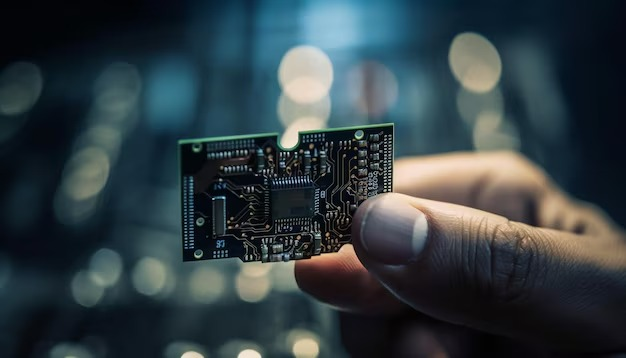
Compact electronic products often place strong pressure on the power section. Designers need stable voltage conversion, limited board area, controlled heat, and a practical component count. In embedded systems, portable devices, and dense control boards, the power stage must fit around processors, sensors, memory, and communication circuits without creating unnecessary layout complexity.
For this reason, we consider a TPSM82821SILR Compact Step-Down Power Module when a design needs point-of-load conversion from a low-voltage input source. Rather than focusing only on nominal current, we also look at input range, output adjustment, transient behavior, package size, protection functions, and the effect of integration on PCB planning.
Why Board Space Changes Power Design Decisions
Space-constrained boards often make discrete power designs more difficult. A conventional buck stage may require an external inductor, switching components, compensation parts, and careful placement around sensitive traces. Each added component takes area and also creates more routing decisions during PCB development.
An integrated module changes this tradeoff. TPSM82821SILR combines a synchronous step-down converter with an inductor in one package. Manufactured by TI, the device reduces the number of external power-stage parts and can simplify the physical layout around the point-of-load rail.
The device accepts 2.4 V to 5.5 V input and provides an adjustable 0.6 V to 4 V output. That range supports several low-voltage rails found in compact embedded electronics. The 1 A output capability also fits loads that do not require a high-current regulator.
From our sourcing perspective at Mayhwa, package details are important because engineers often need to confirm whether a part can fit an existing footprint or a revised board layout. We therefore treat dimensions, pin count, and package type as practical procurement information rather than secondary specifications.
Load Response Matters Beyond Rated Current
Rated output current tells only part of the story. Digital loads can change quickly when a processor wakes, a radio transmits, or a subsystem changes operating state. During these transitions, the regulator must respond fast enough to keep the output voltage within the design target.
The module uses DCS-Control™ topology, which supports fast load-transient response and accurate output-voltage regulation. We see this as useful in compact systems where the power rail supplies devices with changing current demand.
Its efficiency can reach up to 95% under suitable operating conditions. Power-save mode is also designed to improve efficiency during light-load operation. For battery-powered equipment or embedded devices with long idle periods, light-load behavior can influence energy use as much as full-load efficiency.
A Texas Instruments Miniature Buck Power Module is therefore better evaluated by looking at the actual load profile, not only the maximum current printed in a component table. We recommend comparing normal load, peak demand, idle current, input voltage, output rail, and thermal conditions together.
Integrated Functions Can Reduce Design Burden
Protection and startup behavior also affect how a regulator fits into a system. The device includes integrated soft start-up, power-good output, output discharge, overtemperature protection, and hiccup short-circuit protection. These functions can reduce the need for separate supervisory or protection components in some designs.
Soft start-up helps control the rise of the output rail during power-on. Power-good provides a status signal that can be used by the wider system. Output discharge can help bring the rail down after shutdown, which may matter when a circuit has defined power sequencing requirements.
Overtemperature protection and hiccup short-circuit protection add fault-response functions inside the module. Engineers still need to design the complete power path correctly, but integrated protection can make the regulator easier to assess during schematic review.
For B2B buyers, we also consider these details when comparing stocked parts. A TPSM82821SILR Compact Step-Down Power Module should be matched to the electrical and mechanical requirements first, then evaluated for availability, delivery timing, and sourcing conditions.
The Package Supports Dense Layouts
The module uses a 10-pin MicroSiP™ package measuring 2.0 mm × 2.5 mm × 1.1 mm. This small profile is useful when the power section must fit near the load while leaving room for signal routing, connectors, shielding, or mechanical features.
Because the inductor is already integrated, designers can avoid placing a separate magnetic component beside the regulator. That can shorten the local power-stage layout and make board planning more compact.
This form factor suits miniature point-of-load supplies, portable electronics, and other embedded systems where board area is limited. It can also be considered in industrial or server-related subassemblies when a local low-voltage rail falls within the module’s electrical range.
At Mayhwa, we support B2B customers that need electronic component sourcing for development, replacement, shortage response, or production planning. For this part, stock is currently available, which can be relevant when engineers are checking both technical fit and procurement timing.
What to Check Before Selection
Before selecting the module, we suggest confirming the input-voltage range, required output voltage, continuous and transient current, board space, thermal environment, package compatibility, and expected load profile. A Texas Instruments Miniature Buck Power Module may simplify a compact rail, but the decision still depends on how the complete board is designed and how the product will be built.
Procurement teams should then compare price, delivery time, stock status, and component quality with the engineering requirements. The 1 A output, 2.4 V to 5.5 V input, adjustable output, integrated inductor, compact package, and built-in protection functions provide a practical basis for technical review before validation and purchasing.