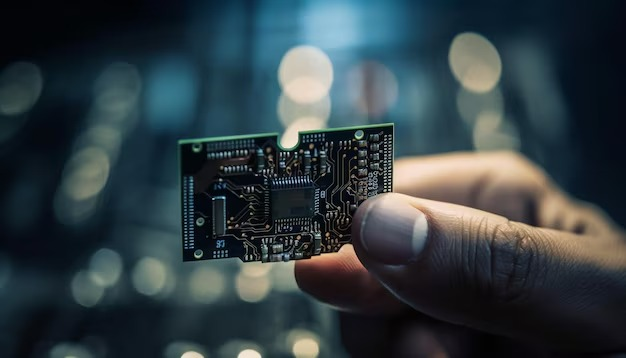
Motion sensing is becoming common in compact electronic systems that need to detect movement, orientation, vibration, or impact. When we review a sensing design, we usually consider power use, board space, interface choice, measurement range, and response speed together. These factors matter in industrial equipment, portable devices, monitoring units, and embedded control products.
A motion sensor is only one part of the signal path. Its data still needs to reach a controller, communication circuit, or decision layer. From our perspective, separating the sensing task from the control task makes component selection clearer and helps engineering teams evaluate the complete hardware architecture.
Sensor Roles Before the Control Stage
The LIS2DH12TR from STMicroelectronics is a three-axis linear accelerometer designed for low-power motion sensing. It provides digital I²C and SPI output, so acceleration data can move directly to a compatible host device without requiring a separate analog conversion stage.
Its selectable ±2g, ±4g, ±8g, and ±16g measurement ranges provide flexibility for different motion conditions. We may consider a smaller range for subtle movement, while a wider range can suit applications that experience stronger acceleration or impact.
Power behavior is another practical design point. The device operates from 1.71V to 3.6V and can consume as little as 2μA in supported operating modes. Output data rates range from 1Hz to 5.3kHz. This allows engineers to address both slow movement monitoring and faster motion events.
When real-time control is also part of the architecture, engineers may evaluate a processing device such as TMS320F28335PGFA C2000 Digital Signal Controller DSC for the control stage. We see the sensor and controller as separate functional blocks, so the full signal path should be reviewed before component selection.
Embedded Functions Change System Behavior
Acceleration values alone do not describe the full capability of a motion sensor. The LIS2DH12TR includes programmable interrupt functions for motion and free-fall detection. It also supports 6D and 4D orientation detection, which can reduce the amount of basic event processing required elsewhere in the system.
Sleep-to-wake behavior is useful in products that spend long periods in an inactive state. Instead of keeping the processing section fully active, the sensing stage can detect a relevant movement event and trigger the next system action.
An embedded FIFO can buffer samples before the host reads them. The integrated temperature sensor provides another internal data source. We still recommend reviewing how these functions fit the intended firmware and system behavior instead of selecting a device only because it offers more integrated features.
In a wider control architecture, a Texas Instruments C2000 32-bit DSC performs a different role from the accelerometer. The motion device detects physical changes, while the controller can process logic, manage control functions, or exchange data with surrounding circuits.
Package Size Is Only Part of PCB Planning
The LIS2DH12TR is supplied in a 12-pin LGA package measuring 2.0 × 2.0 × 1mm. Its small surface-mount footprint can support space-constrained PCB designs. However, package size should be considered together with pad design, soldering conditions, placement accuracy, and automated assembly requirements.
Mechanical position also affects motion-sensing results. We may obtain different signals when a sensor is placed near a vibration source compared with a position closer to the center of the product. PCB flex, enclosure vibration, and mounting orientation can also influence recorded acceleration.
The device operates across a -40°C to +85°C temperature range. Engineering teams should compare this range with enclosure temperature, nearby heat sources, operating cycles, and environmental conditions before confirming suitability for a project.
Control-side hardware creates a different set of layout questions. A part such as TMS320F28335PGFA C2000 Digital Signal Controller DSC belongs to another functional category, so comparing package dimensions alone gives an incomplete view of board planning.
Application Requirements Should Shape the BOM
Motion sensing can support display orientation, shake control, pedometers, gaming or VR input, and impact recognition. Similar sensing principles can also be applied to industrial movement detection, tilt monitoring, equipment status observation, or event logging when the surrounding system is designed for these functions.
From a sourcing perspective, we look beyond the part number itself. Package type, manufacturer, required quantity, delivery schedule, application conditions, and quality requirements all affect procurement decisions. At Mayhwa, we support B2B customers with electronic component sourcing and supply-chain requirements rather than changing the engineering role of the selected device.
When sensing and control functions share the same system, engineers should review voltage compatibility, communication interfaces, sampling requirements, interrupt behavior, and software handling. A Texas Instruments C2000 32-bit DSC may handle the control layer, while the LIS2DH12TR supplies motion data through its digital interface.
Procurement teams should also verify ordering codes, package forms, manufacturer information, required quantities, and expected delivery schedules. These checks become more important when a prototype moves toward pilot production or when an existing BOM faces availability pressure.
A More Practical Way to Review Motion-Sensing Components
We find that clearer component selection begins by separating system functions. The accelerometer measures movement, the controller processes or responds to information, and the surrounding circuit provides power, communication, and physical integration. Reviewing these roles together can reduce mismatches between the schematic, PCB layout, firmware, and sourcing plan.
For B2B projects, technical suitability should be considered together with price, delivery time, quality, and supply continuity. Mayhwa supports customers with sourcing resources for urgent quotations, sample requests, component shortages, and regular procurement needs. The final component decision should still follow the project specification, operating environment, and verified manufacturer information.